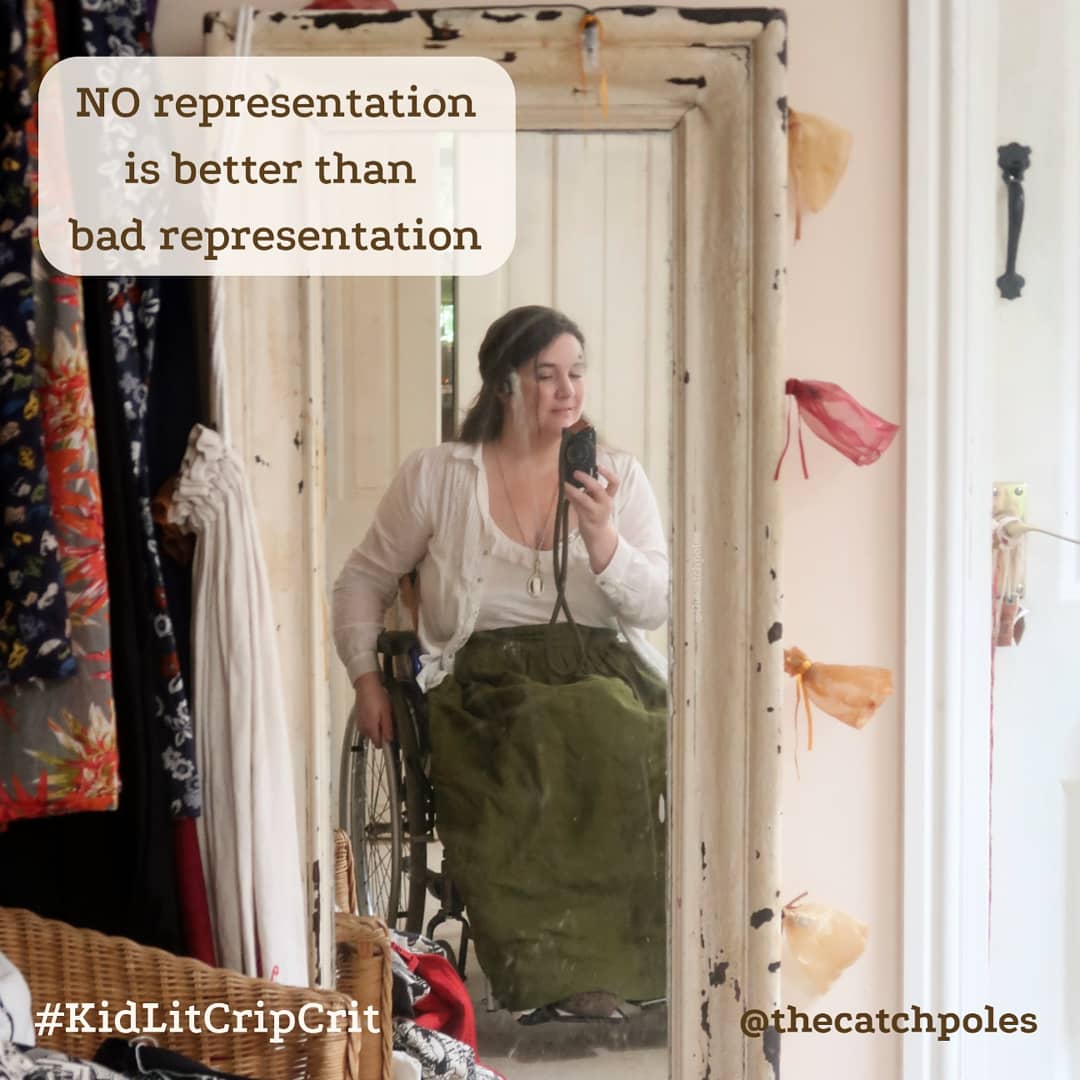
No disability representation is better than bad disability representation
Back in November (2020) The Witches film – a horrifyingly bad representation of disability – was everywhere, as were heartfelt posts explaining quite why it is so horrifying. The hashtag #NotAWitch went round. There are powerful posts out there on Instagram by people whose disabilities are very similar to those shown in the film – I won’t try to paraphrase them, but do read Jen Campbell’s at the end of this post.
It’s important to note that the witches in Roald Dahl’s book do not have hands like this. It’s pretty staggering, but they actually added them in to the 2020 film.
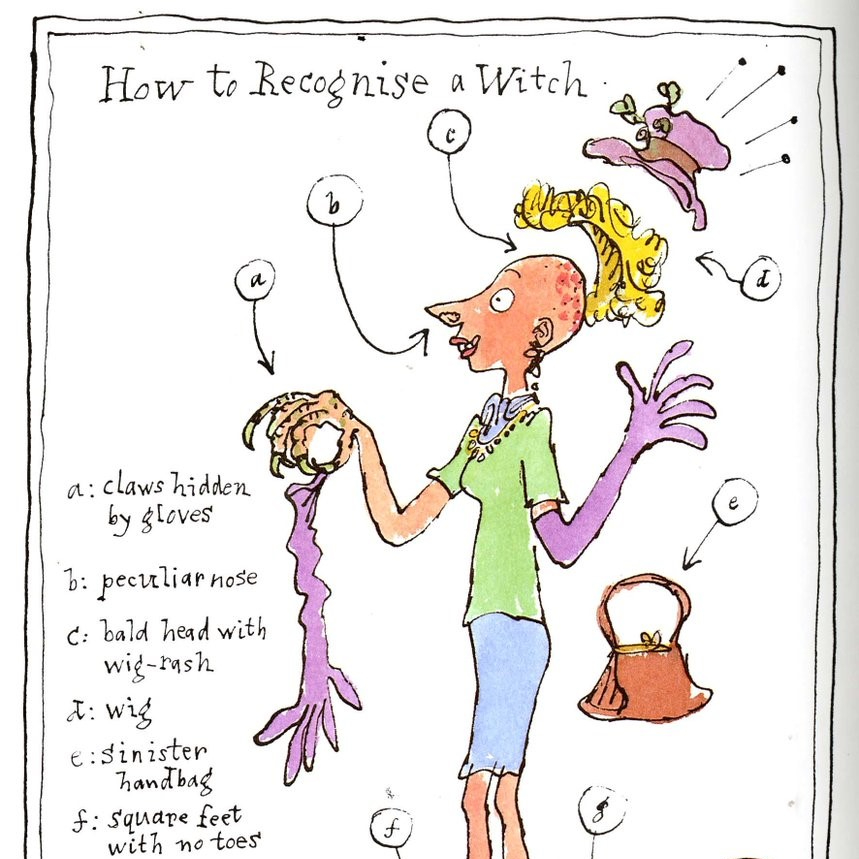
Quentin Blake’s illustration in Roald Dahl’s book 
Anne Hathaway as the Grand High Witch in the 2020 film
Of course some people argued that the film has nothing to do with disability at all – that the witches are just monsters. And Anne Hathaway’s hands just happen to look like one, very specific, disability.
Who knows what the intent was here – I’m not sure it matters. (Anne Hathaway herself has apologised sincerely, though it will not have been her creative choice to make.) In designing hands with three fingers, that look like disabled hands, the film taps into a rich seam of disability as a manifestation of evil. It’s an ancient, tired trope. We should have left it behind a long time ago. Like, in the 16th century. (Richard III anyone? It’s of its time. And Benedict Cumberbatch should know better.)
Films and books mine disability constantly to create a particular effect for able-bodied consumers. Generally that effect is either horror, or inspiration.
And as consumers it’s very tempting to compromise – to feel that when there’s so little representation out there, something is better than nothing.
It is not.
If a disabled child sees no representation of themselves in books or films, they’ll see themselves in non-disabled characters.
But if you present them with a disabled character, who looks a bit like them, and reveal them to be evil, monstrous…
Or give them a disabled character that tells them their job is to ‘overcome it’ and inspire…
Or show parents grieving because their child has been born with a disability…
Or tell them it’s on them to provide teachable moments for other kids…
that could affect them profoundly.
Disability should NEVER be used as a shorthand for evil. Or ‘inspiration’. Or anything else come to that.
Do disability properly, or please just leave it alone. Disabled people – especially children – deserve so much better.
Something is NOT better than nothing.
– Lucy Catchpole
(First posted on Instagram on November 4th 2020)

You can find our list of 20 great books we think do disability really well here. They’re all by disabled authors.
And if you’d like to support what we do, there are affiliate links to Bookshop UK and Bookshop US – where you can buy most of the books on our disabled authors list. We get a small percentage of any book ordered – which is always lovely.
If you’re interested in finding out about books we’ve written ourselves, you can find them just below.

 The Catchpoles