Back in September 2019 I wrote this short piece about Alison Lapper for the Instagram account @makemotherhooddiverse.
In terms of media representation, disabled mothers are thin on the ground. So Alison Lapper, naked, pregnant, very definitely disabled, and on the fourth plinth in Trafalgar Square was a beacon for me in the Noughties. I’ve just heard that Alison Lapper’s son Parys has died, aged 19, and feel knocked sideways with the sadness of it.
Very few disabled mothers are heard, and she’s a glorious exception. As a young, newly disabled woman, watching her pregnancy and motherhood in the BBC documentary Child of Our Time gave me hope that motherhood might be possible for me. I pored over her book, and the few times I saw her on tv talking about parenting as a disabled person affected me profoundly. She was so confident in her mothering.

My sadness about this is selfish, I don’t know Alison or her son. Like most people when it comes to disability, I wanted to see a happy ending so badly. I wanted her strength to be enough.
Because if her strength wasn’t enough, then what does that say? It says that perhaps it just isn’t possible. That perhaps without extra resources, privilege, support structures, it is not possible to be severely disabled and bring up a child as a single mother.
Alison has said in interviews that Parys was bullied at secondary school, that the bullies focused on her disability. That he asked her to stop coming to Parents’ Evenings at school. For me this is the fear, that the uncomplicated love our children feel for us will give way to something else when they grow up and see us through the eyes of others. That they will feel shame. As disabled mothers there’s very little we can do about that – this one is on all the able-bodied people around us, and that is scary.
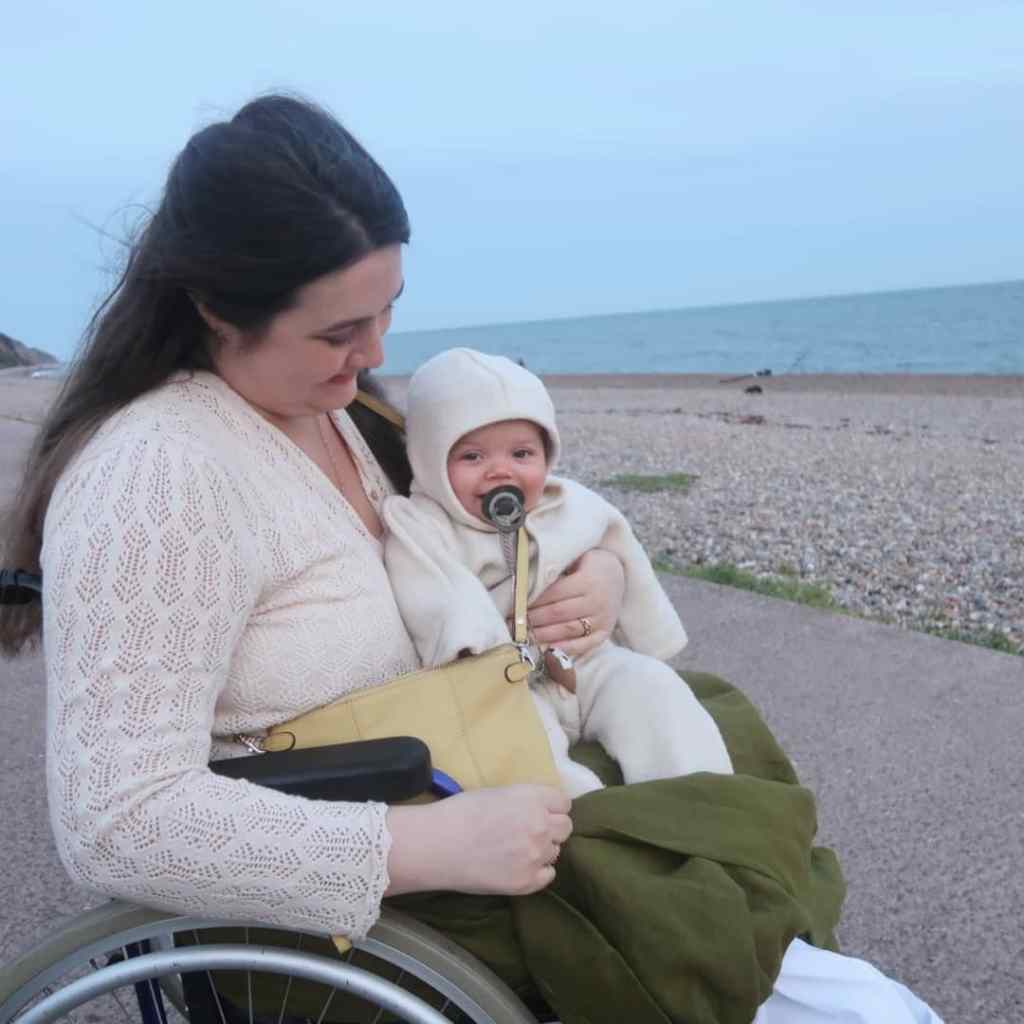
Lucy Catchpole


I read your article and was moved by it. I wish you well in your motherhood. My mother had MS. I became used to people assuming that she was my grandmother, “teasing” (= bullying) me for her being “weird”, being shunned because I could not go out with my friends because I had to be home to care for her. Sad thing: Not Just The Kids. Teachers had a go at her for “not encouraging me to socialise more and have friends round”; other parents just stared at us; ignored her, even when she spoke to them; told her she shouldn’t have had kids (like she ought to have known she would suffer with MS???!!!) put a protective arm around their own kids and said “she’s just a cripple, ignore her”. My Mum was not “just” anything. She was brave and kind and loving. She taught me integrity and a good work ethic and empathy. She was a BRILLIANT mum. I turned out OK (if I do say so myself) but I never stopped being angry at how we were treated. When I read what you wrote: “…this one is on all the able-bodied people around us”, I cried. I am now in my seventies but I cried: for Mum, for you, for all the people who live with/through/despite a huge range of disabilities, despite the cruelty of the non-empathic “able-bodied”. I wish you and your family joy.
LikeLike
What a powerful comment, thank you for telling me about your mum, who sounds wonderful. Horrible hearing about the bullying (yes – not teasing) you endured – from adults especially, who absolutely should have known better. It sounds like righteous anger and sadness you carry with you, and I’m sorry for it. For me, a lot of my worse fears have not come true – some of that is luck I think. (I know other disabled parents who have a harder time.) But some is the world having improved – or I hope so at least. (I’ve only had that c word used about me once, 20 years ago.)
Would you be ok with me sharing your comment elsewhere, e.g on Instagram – anonymously? There’s value to people seeing quite how bad things were. I also wanted to mention a book we contributed to last year – We’ve Got This: Essays by Disabled Parents. There’s an extract – one of our featured posts, so hopefully you’ll find it – but the book is full of different people’s experiences. I’ve also written a picture book – Mama Car – which I hope will do something to destigmatise disabled mothers from the earliest age. And thank you – I wrote this article years ago – we are having a very joyful life! Lucy x
LikeLike
Hi Lucy,
I am so glad that things are going well for you.
Yes, by all means post my comment elsewhere (and yes, anonymously, please). Please also mention that it is a memory from growing up in the 1960s. I don’t mention until quite late in my comment that I am now in my seventies and some people may not read that far (or do the maths lol). I completely agree that it is important that we notice that times have changed. There is much to do but so much progress has been made. Thankfully, “Does he take sugar” is no longer the default attitude.
I will look up both of the books you mention. Well done with the picture book! Normalising disability in the eyes of youngsters is so very important. I was lucky, not only to grow up with Mum but also to live near a respite care home for residents with a wide range of disabilities. Mum taught one of the regulars to read and, after the lesson, he would push her round the grounds and help her to walk up to the fence to see the donkeys. That’s synergy, not disability!
I wish you and your family continued joy,
Margie
LikeLike
That’s great – thank you. And I DID spot your age and do the maths, and will absolutely make sure it’s clear – very thoughtful of you!
LikeLike
I find it inspiring how Alison Lapper shared her experiences as a disabled mother.
LikeLike
Yes – I’m very grateful she did. It made a big difference to me, and I’m sure many other disabled people.
LikeLike