By Lucy & James Catchpole

We’re disabled, we’re children’s authors, and we work in children’s publishing – disability representation in kidlit is close to our hearts. And it’s disability history month, so we thought we’d make a big list of children’s books with disability representation, by disabled authors.
Why disabled authors?
Until recently, disabled adults weren’t seen as the experts on our own lives – when publishers wanted experts, they went to doctors, or parents of disabled children. But we firmly believe disabled authors are best placed to write about disability. (And non-disabled authors have had their turn – literature is full of Tiny Tims and Captain Hooks as a result!)

Easily the most popular post on this blog is a list of our favourite 20 books by disabled authors. This list is different – the aim is a big list of children’s books – all with disability representation, all by disabled authors. The bigger the better. You’ll find our old favourites and some new favourites, too – but not only our favourites. That would be too narrow for this list. So, some we like, some we love, but they all bring new perspectives – they all have value.

A big list, but we haven’t included every book. Our guide was – would we read this book to our own child, if they were disabled? So we decided we would include books in which parents abandon disabled children – but only for older readers. And we steered clear of “you can do anything if you try hard enough” messages, because we find it deeply unhelpful for disabled people of any age.

Finding the books
I’ve arranged the books in approximate age order, going from the youngest – picture books for age 2 and up, to picture books for school-age children (4+), to middle-grade for age 8 plus, then books for teenagers. And at the bottom, some early reading books. We’ve noted the sort of disability rep at the bottom of each review, and a content note – outlining anything potentially thorny which comes up. (Like those less-than-reliable parents.)

A note on autism and neurodiversity: it’s wonderful to see more and more books by autistic and neurodiverse authors out there. As people with physical disabilities, neurodiversity isn’t our specialism – we’ve included some we think very highly of, but will have missed many more.
Whether you borrow them from libraries, buy locally or online, or through our affiliate links, we hope you track down and enjoy some of these books.
If you’d like to buy the books through us, the link on each book is Blackwell’s, because they deliver internationally – postage included. Our list is also on UK Bookshop and US Bookshop.
And for books we’ve written ourselves, have a look our books page. — Lucy & James

Children’s picture books for young children – age 2 and up
This list is in age order – from the youngest picture books. Because of the way publishing works, there aren’t many books by disabled authors for very young children.

Best Day Ever! – illustrated by wheelchair user Leah Nixon. Age 2+
The one book here NOT by a disabled author – included because illustrator Leah Nixon is a wheelchair user. While Marilyn Singer’s text is expertly written, the only indication of disability is in the illustrations – as a child in a manual wheelchair takes his dog for a walk. Our daughter’s favourite book when small, it perfectly captures the highs and lows of young children’s emotional landscape – in which it’s either the best or the worst day ever. (Clarion 2021)
Disability representation: the main character – a child – uses a manual wheelchair.
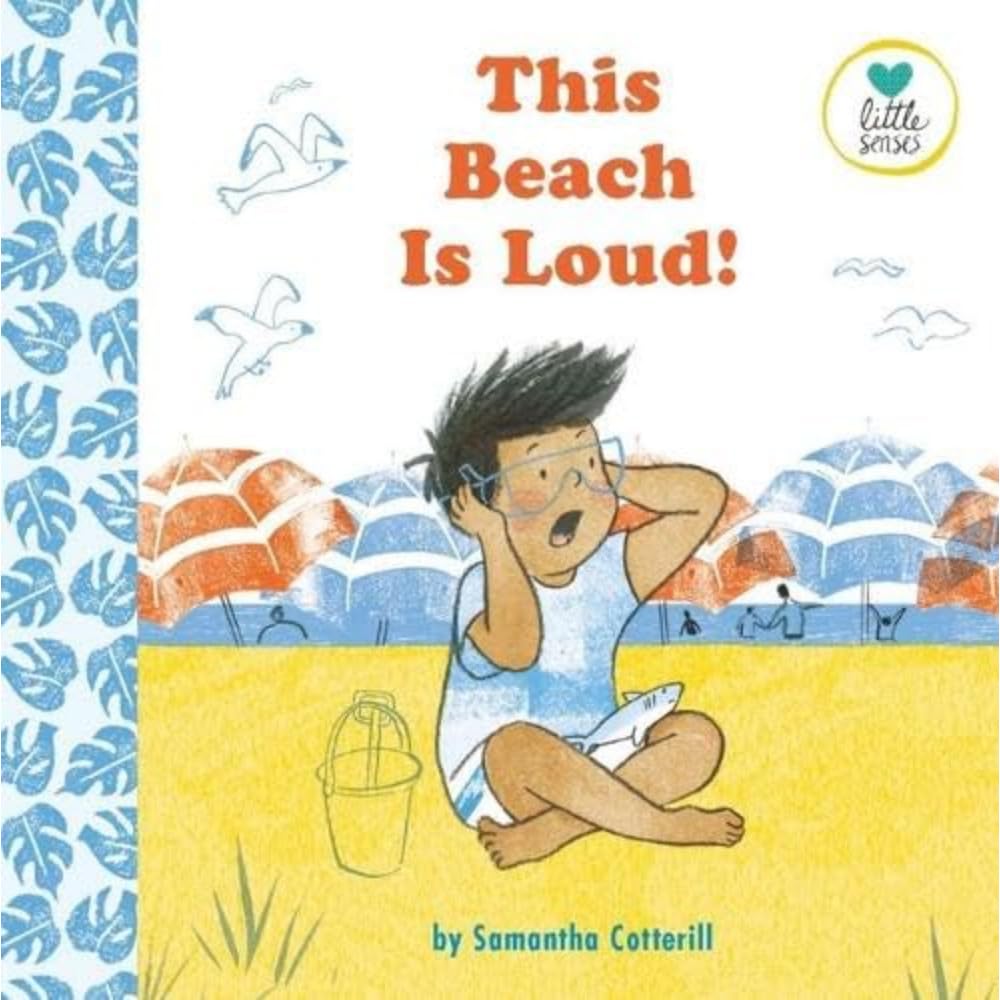
This Beach is Loud! – author-illustrator Samantha Cotterill. Age 3+
An exuberant, talkative boy visits the beach with his father. This book by autistic author-illustrator Samantha Cotterill does not explain autism to a non-disabled reader – autism isn’t named in this warm-hearted, funny story. The story is through the boy’s eyes – his excitement, the sensory overload of the beach. Read our full review here. Others in the same series also recommended. (Trigger 2020)
Disability rep: sensory overload – autism mentioned in a clinical psychologist’s note.
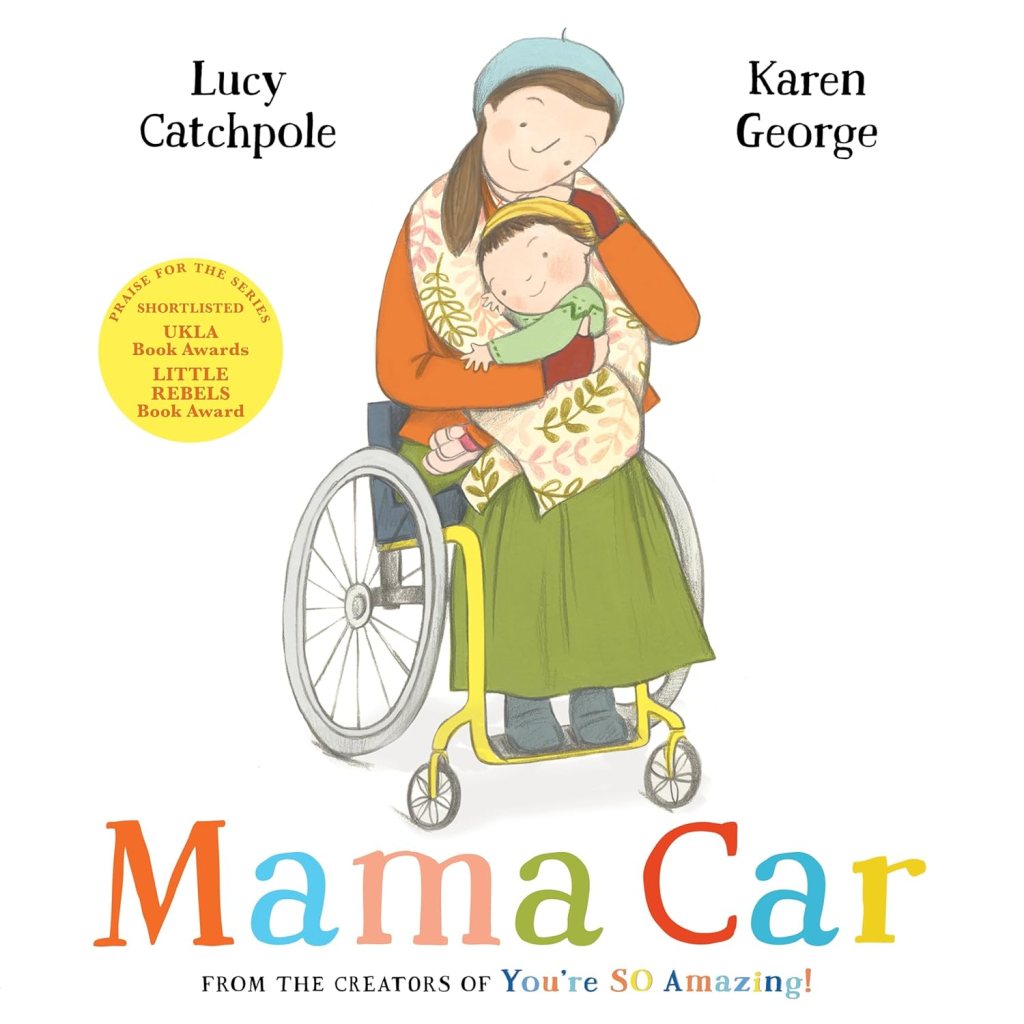
Mama Car – a picture book by Lucy Catchpole. Age 2+
A young picture book, which introduces a mother’s wheelchair as just one of the family’s vehicles – part of a lovely, cosy life. It’s by me – I’m admittedly biased. (I’m uncomfortable putting it near the top, but there are few picture books by disabled authors for the youngest children.) Find more about it here on this blog. Illustrated by Karen George. (Faber 2024)
Disability rep – disabled parents, mother uses a manual wheelchair (& transfer board), father has one leg and uses crutches.

Can Bears Ski? – by Raymond Antrobus & Polly Dunbar. Age 3+
A child-bear discovers their deafness, visiting an audiologist with their father. It turns out it’s not “can bears ski?” people keep asking, but ‘can you hear me?’. An insider’s story of deafness for young children, by a deaf poet and hard of hearing illustrator. We represent illustrator Polly Dunbar. Read our full review here. (Walker 2021)
Disability rep: a deaf child uses a hearing aid & visits an audiologist. Characters don’t sign, but the UK paperback includes a BSL alphabet at the back.
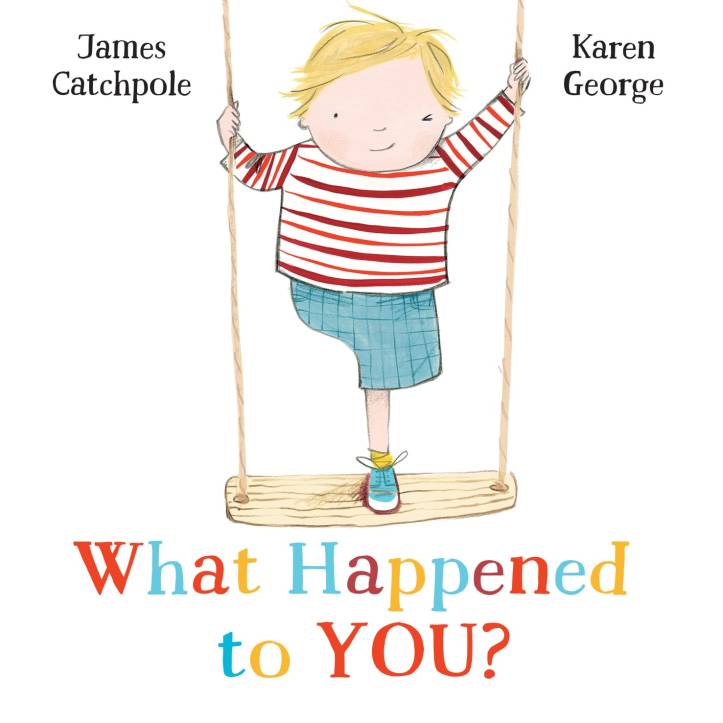
What Happened to You? – by James Catchpole. Age 3+
Another book we’re biased on – one of us wrote it. Joe just wants to play, but the children in the playground keep asking him questions about his leg. Finally, they stop asking and join in his game. We’ve written lots about it here on this blog. (Here’s a page with more books by us.) Illustrated by Karen George. (Faber 2021)
Disability representation: a boy with one leg, no prosthetic.

The Moonlight Zoo – incidental deaf rep, Maudie Powell-Tuck. 3+
A sumptuously illustrated picture book, with a main character who wears a hearing aid. Eva’s cat Luna is missing. She finds a magical night-time world of lost animals – can she track Luna down before morning, when the moonlight zoo disappears? Eva’s deafness is unmentioned – her hearing aid is just there. Valuable incidental representation for deaf children, illustrated by Karl James Mountford. Watch the author read it on YouTube here. (Little Tiger 2020)
Disability representation: main character – a small girl – wears a hearing aid.

Monster Hands – Jonaz McMillan, illustrator Dion Mbd. 3+
A book about ASL by two authors – Jonaz McMillan is Deaf, Karen Kane a sign language interpreter. Illustrated by Dion Mbd. Love of sign language is at the heart of this simple, effective picture book. A Schneider Honor book. Kirkus review here. (Nancy Paulsen 2024)
Disability rep: main characters, children, are Deaf and use ASL?

Come Over to My House – co-written by Eliza Hull. Age 3+
The simple text takes the reader from house to house, where each house and family is individual and unique. Unusually – given how rarely disabled parents are represented – disabled parents outnumber disabled children. Includes a child who’s an ambulatory wheelchair user, which is always valuable representation. Co-written by Australian Eliza Hull and Sally Rippin, illustrated by Daniel Gray-Barnett. (Hardie Grant 2021)
Disability rep: wheelchair user, autism (parent & child), Deaf mother (ASL), blind mother, achondroplasia (dad & child), intellectual disability (parent), amputee father.

Gina Kaminski Saves the Wolf – Craig Barr-Green
Books about disabled characters don’t have to be humourless or lacking in wit and plot. This hugely enjoyable book stars Gina – a character who struggles with a classroom that is too noisy, smelly and hot. Gina tells the story of Little Red Riding Hood in her own particular way, in this characterful and charming retelling. Illustrated by Francis Martin (Little Tiger 2023)
Disability rep: autism

Picture books for school-age children – age 4 and up
Slightly older picture books – for school-age children. Picture books have so much to offer children all through primary school. I Am Not a Label is particularly valuable for Disability History Month.
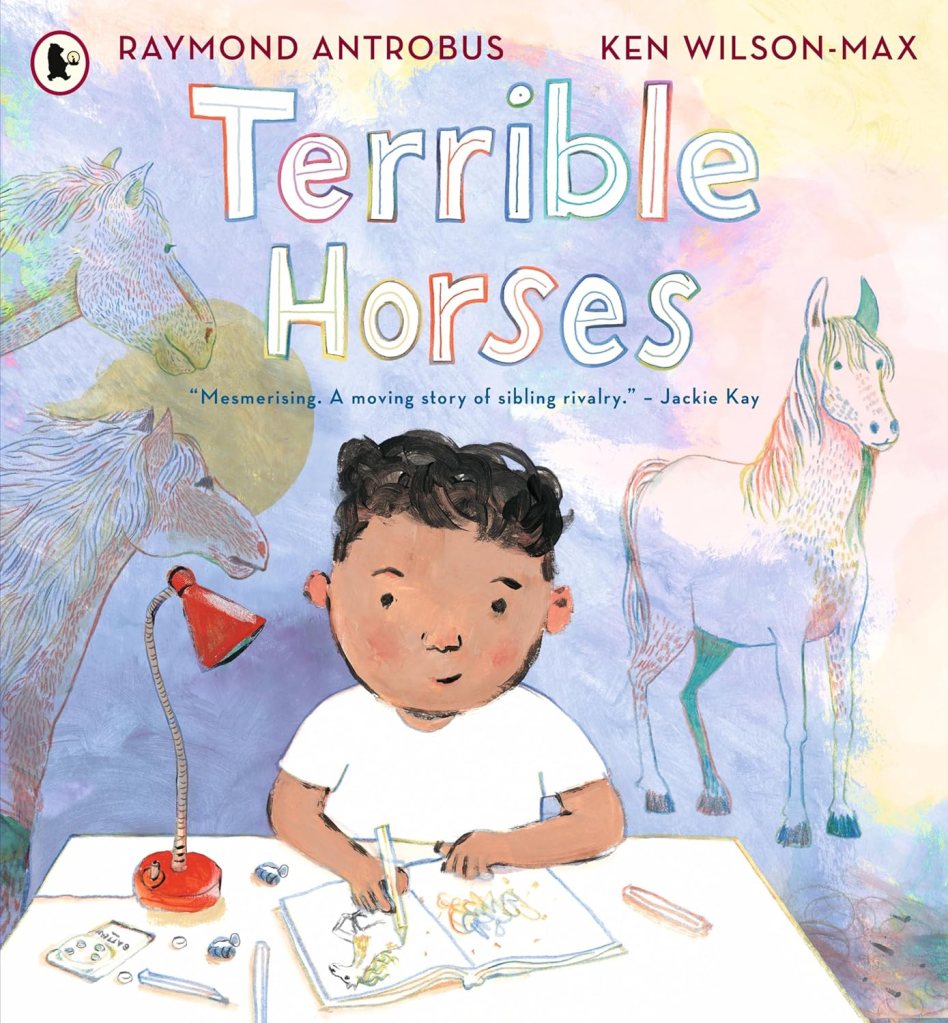
Terrible Horses – a picture book by Raymond Antrobus. Age 4+
“My sister is cooler than me. I want her friends to be my friends. I want her things to be my things.” In this story about sibling friction and rivalry, the main character – a boy with a hearing aid – retreats to his bedroom to write stories. illustrated by Ken Wilson-Max. By poet Raymond Antrobus (also author of Can Bears Ski?). (Walker 2023)
Disability rep: main character, a child, uses a hearing aid.
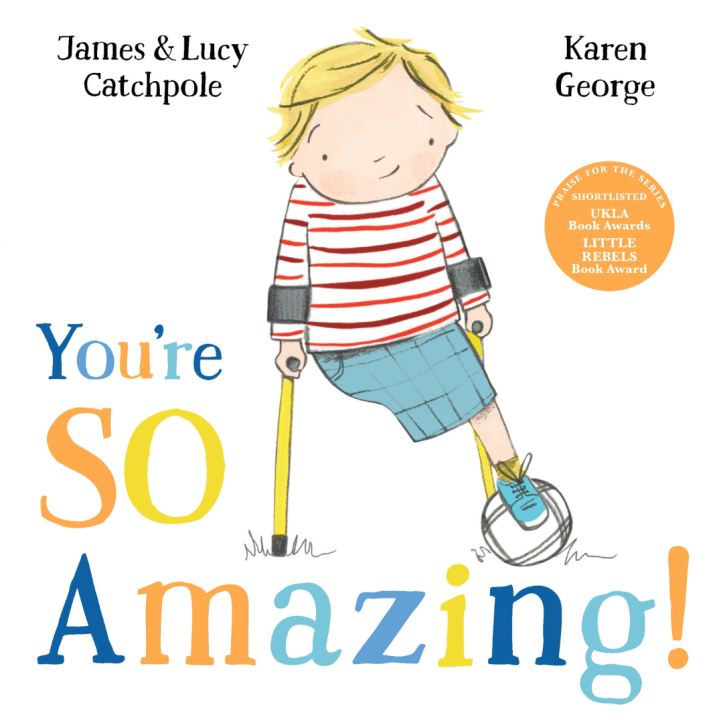
You’re So Amazing! – by James & Lucy Catchpole. Age 4+
A book by us, also illustrated by Karen George. This story is pitched a bit older than What Happened to You? – Joe is tired of people telling him he’s “amazing”, especially when he’s just eating an ice cream. This book encourages readers to think about their own responses to disabled people. A Schneider Honor book, and winner of the Inclusive Books for Children Award. You can find more we’ve written about it here on this blog. (Faber 2023)
Disability rep: a boy with one leg – no prosthetic – using crutches.
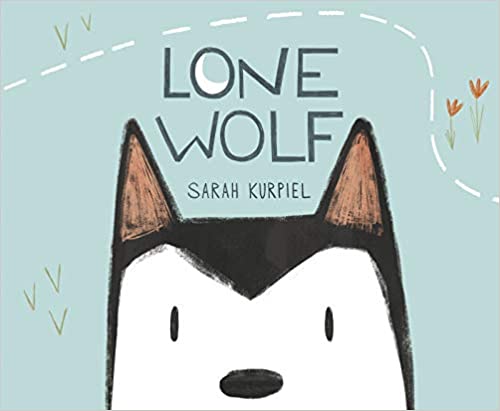
Lone Wolf – incidental disability, by Sarah Kurpiel. 4+
Sarah Kurpiel’s story here is all about the family dog having an identity crisis – and it’s charmingly handled. That one of the children in the family uses a power wheelchair is neither here nor there in terms of the plot, and there’s a lightness and sureness of touch in the way she’s drawn, rooted in Kurpiel’s own experience of disability. (Greenwillow Books 2020)
Disability representation: one family member, a child, uses a powerchair.
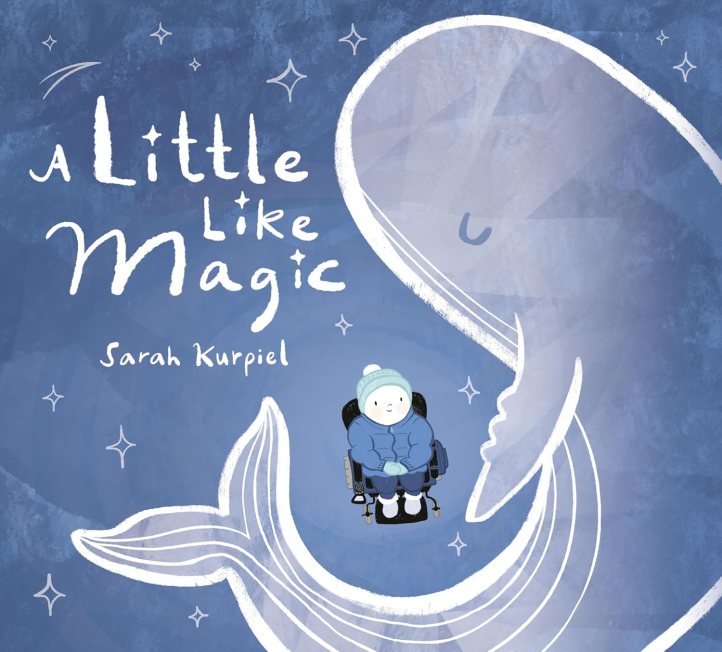
A Little Like Magic – a picture book by Sarah Kurpiel. Age 4+
This simple, sweet story by author-illustrator Sarah Kurpiel won the Schneider in 2025. A young child who uses a powerchair is reluctant to go out, mentioning itchy hats and cold wind. We also see the elements of access that make going out more time-consuming – transferring into the car etc. But really, disability is incidental to the story. At an ice festival, she navigates loss and disappointment. . . but all ends happily. Lone Wolf is by the same author. (Penguin 2024)
Disability rep: main character (a child) uses a powered wheelchair – like the author.

We Are the Scrappy Ones – a picture book by Rebekah Taussig, illustrator Kirbi Fagan. Age 5+
“We are the scrappy ones. We live, we adapt, we defy. Made of stardust and grit, we are spectacular.” At the core of this picture book is an insightful, heartfelt poem by Rebekah Taussig, author of Sitting Pretty, about growing up disabled. Described by the publisher as “a ground-breaking anthem of belonging that celebrates the wide range of disabled children and affirms their worth, just as they are”. (Carolrhoda 2025)
Disability rep: a range of disabilities, author is a wheelchair user.

A Kids Book About Disability – by Kristine Napper, age 5+
This picture-less non-fiction book describes itself as “a clear explanation of what disabilities are and how to navigate conversations about them”. To my surprise on first reading, given the uber stylish typeface and sparse design, the voice is full of warmth, wit and individuality. Written by US teacher and wheelchair user Kristine Napper. Our full review. (DK 2023)
Disability rep: adult narrator has SMA and uses a powerchair.

We Move Together – co-written by Kelly Fritsch. Age 6+
A group of disabled and non-disabled children negotiate barriers and take part in protests in this celebration of disability joy, culture and community. I enjoyed the nod to the great plastic straw debate, which frequently divides non-disabled and disabled people on social media. Co-written by Canadian author and academic Kelly Fritsch and Anne McGuire. Illustrator Eduardo Trejos. (AK Press 2021)
Disability rep: a wide spectrum, including children & adults using mobility-aids.
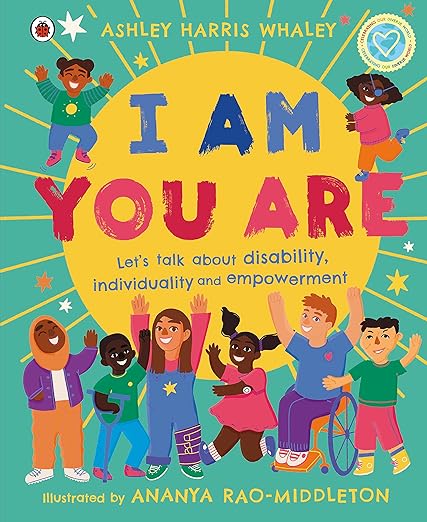
I Am, You Are – non-fiction picture book by Ashley Harris-Whaley, illustrator Ananya Rao-Middleton. Age 6+
The strapline is “Let’s talk about disability, individuality and empowerment”. US author Ashley Harris-Whaley – creator of Instagram account @disabilityreframed – brings us an age-appropriate non-fiction introduction to disability. This book answers many questions teachers want answering, like what is disability? Illustrator Ananya Rao-Middleton is also disabled. (Ladybird 2023)
Disability rep: a range – including cerebral palsy, wheelchair and other mobility aid users, deafness, blindness, autism, limb differences.
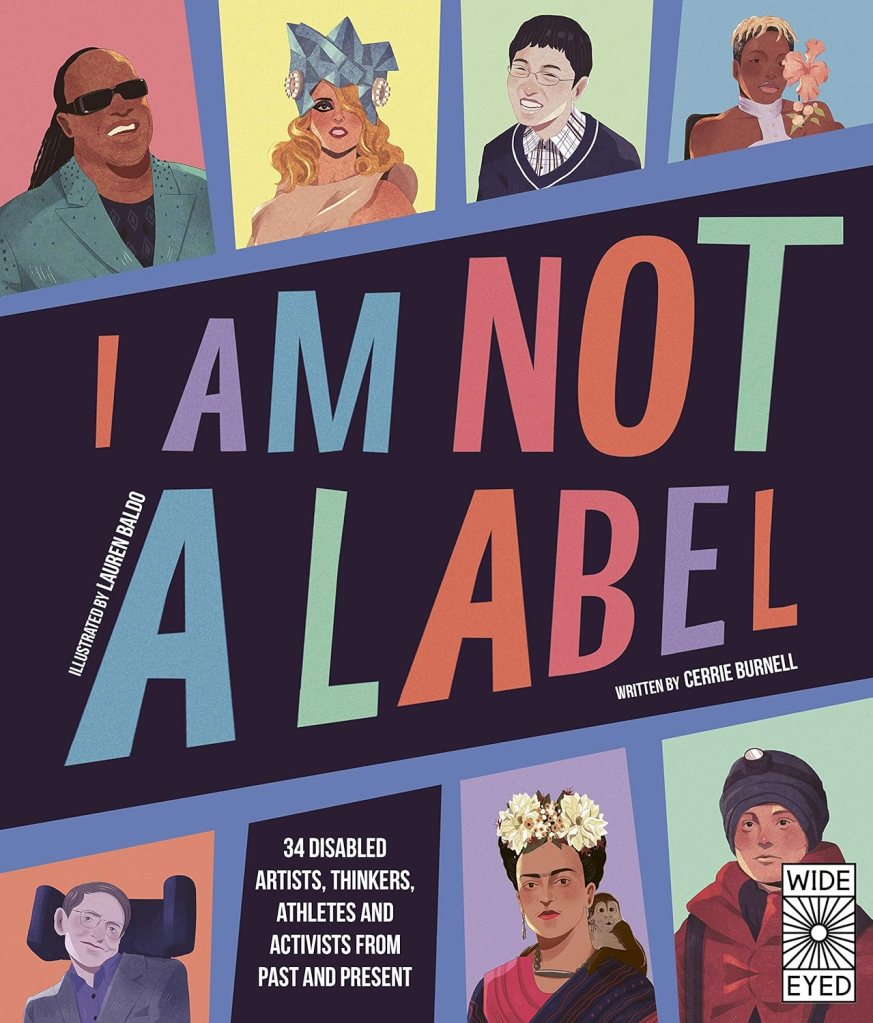
I Am Not a Label – illustrated non-fiction by Cerrie Burnell, Age 7+
34 artists, thinkers, athletes and activists with disabilities, from past and present. Stylishly illustrated by Lauren Baldo, this book presents short biographies of notable disabled people. Author and former CBeebies presenter Cerrie Burnell chose individuals from the obvious: Stevie Wonder, Frida Kahlo, Beethoven, to the less well-known, like Nabil Shaban – Sil in Doctor Who – and a few we might not think of as disabled at all, like Lady Gaga. Read our full review. (Wide Eyed 2020)
Disability rep includes: blindness, autism, wheelchair users, chronic illness, chronic pain, amputees, deafness, dwarfism etc.

Middle-grade fiction and non-fiction – age 8 and up
Novels, anthologies and graphic novels for age 8 and up. Middle-grade disability rep is improving quickly. El Deafo – a brilliant book which deserves to become a classic – is the only pre 2020 book here. And two, Owning It and How To Be Disabled and Proud, aren’t out till spring 2025.

El Deafo – a graphic novel for children by Cece Bell, age 8+
An autobiographical coming of age graphic novel by deaf US author and illustrator Cece Bell. Hugely enjoyable for children and adults, our 10yo (with no real-life experience of deafness) has re-read it numerous times. Hearing readers will wince at the mistakes made by hearing characters, and vow not to repeat them. A Newbery Award Honor Book, and now TV series, El Deafo is amongst the very best disability representation in children’s books. Our review. (Amulet 2014)
Disability rep: main character becomes deaf & uses hearing aids. Content note: 1960s outdated tech. No Deaf culture – Cece decides not to learn sign language. Use of ‘Deafo’.

The Chance to Fly – novel by Ali Stroker, age 8 and up
A delightful middle-grade novel about a musical-obsessed teenager, by Broadway actor and singer Ali Stroker (also the voice on many audiobook versions of books on this list). This book has big “let’s put on a show! right here in this barn!” energy in the best Judy Garland tradition, as 13yo Nat – a wheelchair user like the author – and her friends mount a production of Wicked. There are finely observed details about access compromises, and the way those compromises affect her relationship with her parents,. Co-written with Stacy Davidowitz. (Amulet 2021) Sequel out now.
Disability rep: main character has a spinal injury and uses a manual wheelchair.
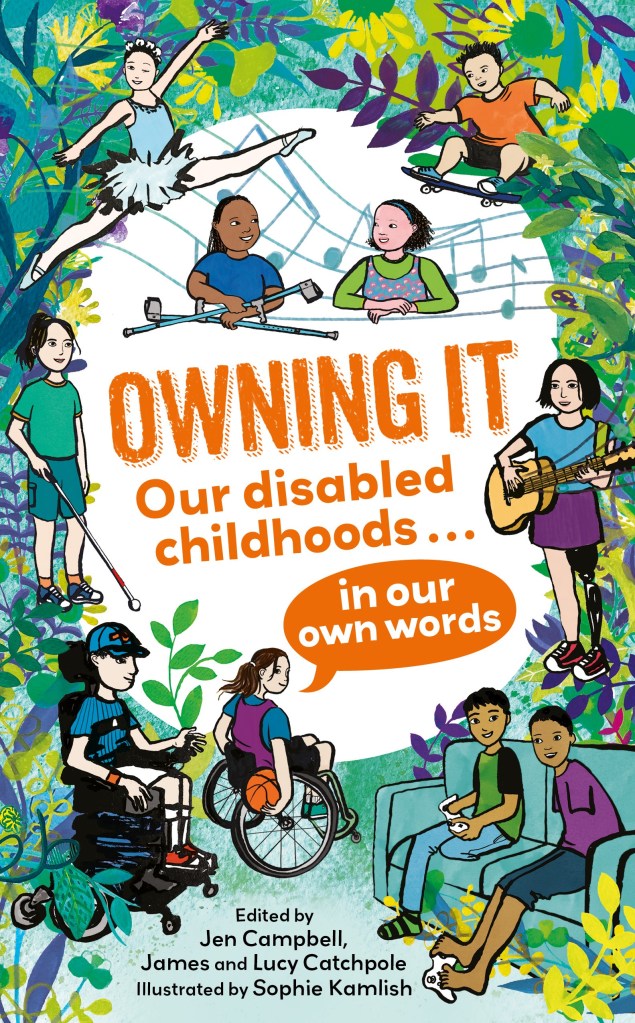
Owning It – non-fiction anthology. Edited by James & Lucy Catchpole, and Jen Campbell. Illustrator Sophie Kamlish. Age 9+
Our disabled childhoods in our own words. 22 disabled writers tell true stories from their own disabled childhoods – including Jessica Kellgren-Fozard in her book debut, Carly Findlay, and Imani Barbarin. It’s edited by us, with Jen Campbell. As we say in the editor’s note, it’s “the book we wish we’d had when we were young”. Read our post about it. With new disabled illustrator Sophie Kamlish. (Faber 2025)
Contributors: Ali Abbas, Polly Atkin, Imani Barbarin, Christa Couture, Carly Findlay, M. Leona Godin, Eugene Grant, Jan Grue, Matilda Feyisayo Ibini, Ilya Kaminsky, Sora J Kasuga, Jessica Kellgren-Fozard, Elle McNicoll, Daniel Sluman, Nina Tame, Rebekah Taussig, Steven Verdile, Alex Wegman, Ashley Harris Whaley, Kendra Winchester.
Disability rep: wheelchair users, scoliosis, facial disfigurement, limb difference, CP, chronic illness, EDS, blindness, d/Deaf, ichthyosis, dwarfism, chronic pain.
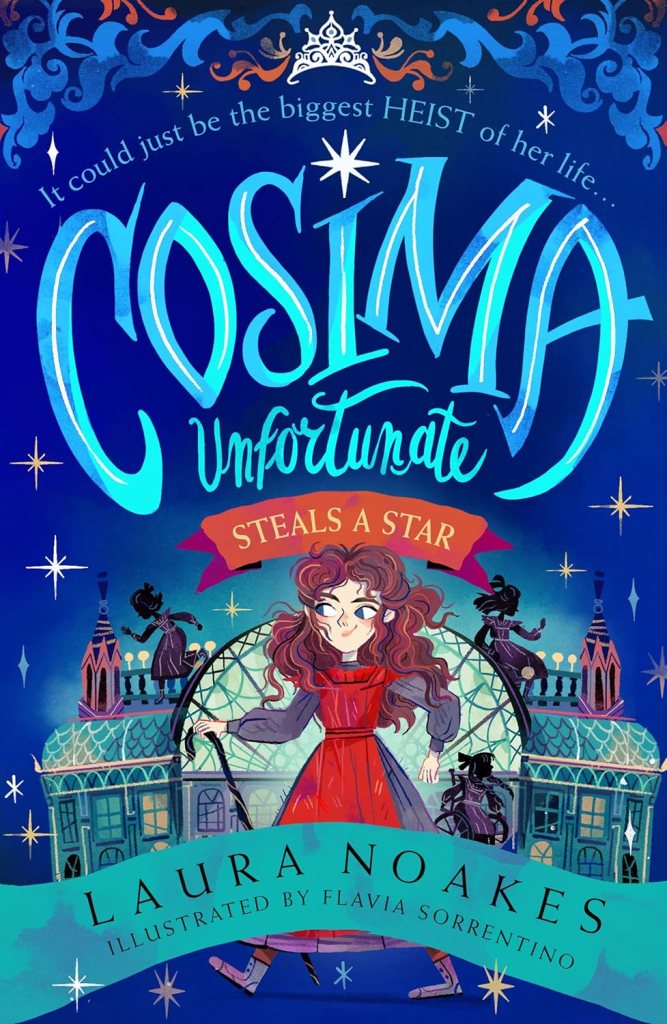
Cosima Unfortunate Steals A Star – novel by Laura Noakes, age 9+
12 year old Cosima grows up in the Home for Unfortunate Girls in this adventure set in Victorian London. It’s refreshing to read a child-heroine with chronic pain and fatigue: “My disability is a bit like a zigzag. Sometimes I walk fine. A lot of the time, when I’m in pain, I have a walking stick. And at other times I use a wheelchair”. Found family and disability solidarity is a theme of this list – Cos finds community with wheelchair user Diya, and Pearl (likely autistic). Laura Noakes shares her heroine’s disability. (Harper Collins 2023) A sequel is out now.
Disability rep: main character – hypermobility, chronic pain. Others: wheelchair user, (presumed) autism, anxiety. Content note: 1899 setting – outdated treatment of disabled people, including institutionalisation. Descriptions of dislocations.
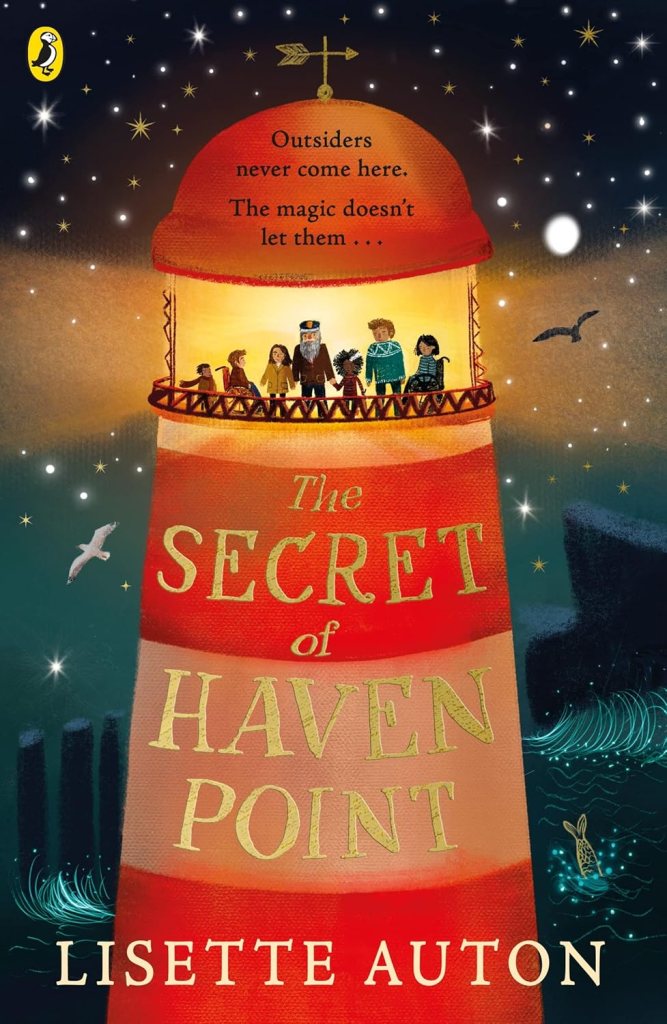
The Secret of Haven Point – a novel by Lisette Auton, 9+
“You see, everyone who finds this place and becomes a Wreckling is disabled. If you’re not, you’re an Outsider, and no Outsider has ever made it past the Boundaries.” Lisette Auton channels disability solidarity into deeply imaginative fantasy – mermaids with razor-sharp teeth, ships-in-bottles that transform to full-sized ships, and a community of disabled young people growing up in a lighthouse. Lisette’s now written two further books with disability rep – The Stickleback Catchers, and Lights Up. (Puffin 2022)
Disability rep: main character – facial disfigurement. Also: blind best friend, Deaf BSL users, wheelchair user, amputees, dwarfism etc. Content note: violence, guns & death.
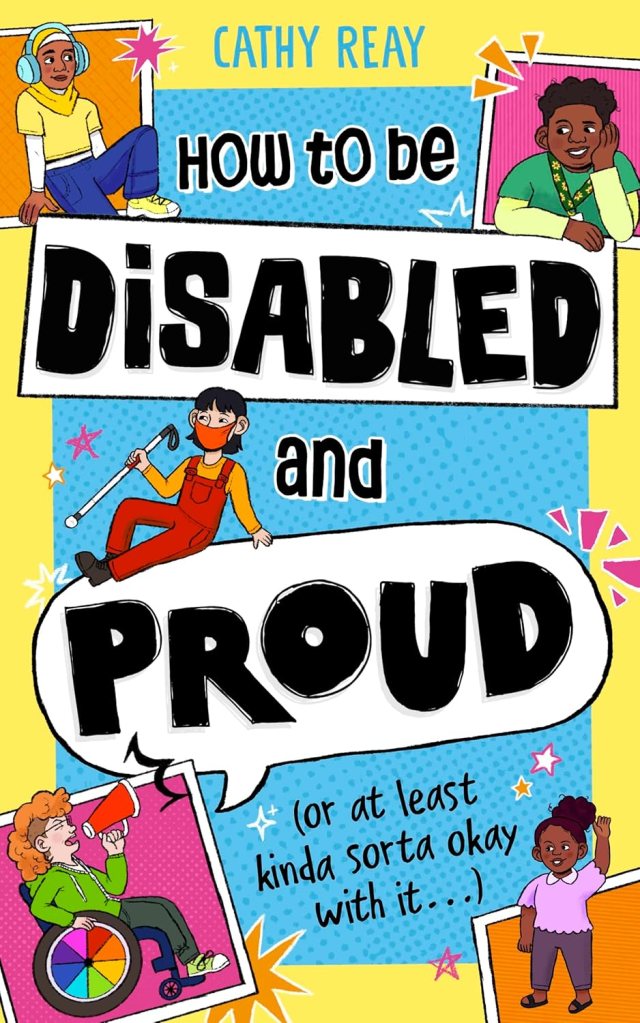
How to be Disabled and Proud (or at least kinda sorta okay with it…) – by Cathy Reay, age 9+
“Have you ever felt like you don’t fit in anywhere? Or like no-one understands what it feels like to be you? Maybe you feel like you’re the only person in the world who looks, moves or thinks like you do. Well, I’m here to tell you that you are not alone, and you belong in the world exactly as you are.” Cathy Reay, British journalist and mother, interviews Ellie Simmonds, Jameisha Prescod, Dr Shani Dhanda, Nina Tame etc in this middle-grade non-fiction book, out in spring 2025 with Puffin.
Disability rep: author has dwarfism, interviewees have a range of disabilities, including dwarfism, chronic illness, blindness, wheelchair user & autism.
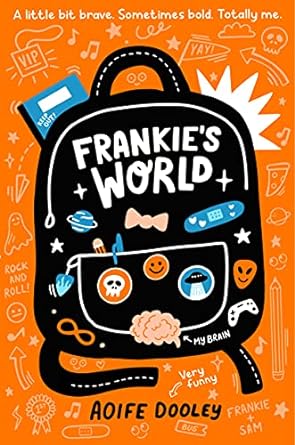
Frankie’s World – a graphic novel by Aoife Dooley, age 9+
This graphic novel from autistic Irish comedian and author-illustrator Aoife Dooley is one of those books our daughter (age 9) practically inhaled – finishing it in a happy blur that same day. Frankie feels different from everyone else at school, but isn’t sure why. She finds an outlet doodling her daily adventures in her journal. When she finds a hidden copy of her birth certificate, she decides to track down her birth father, in the hope he holds the answers… Winner of The Week Junior Book Awards’ Children’s Illustrated Book of the Year 2023. (Scholastic 2022)
Disability rep: autism.
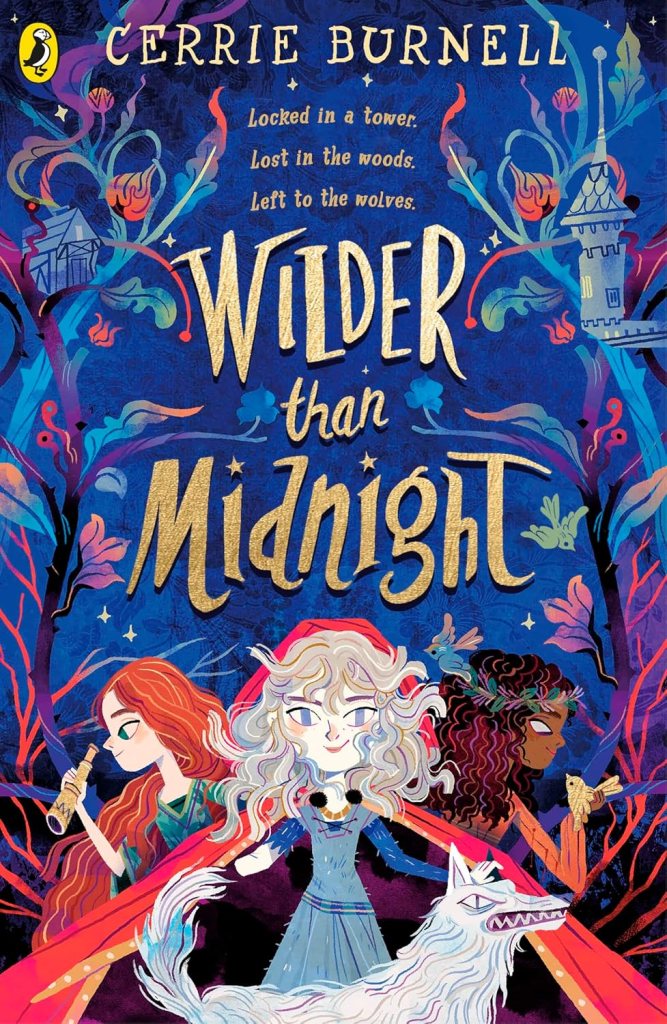
Wilder than Midnight – a novel by Cerrie Burnell, 9+
This magical novel by CBeebies’s Cerrie Burnell is set in a fairy tale world, where heroines like Red Riding Hood and Snow White are reimagined – as stories and legends arising from half-truths. Wild Rose, born with an arm that ends just below the elbow, is in danger of being labelled a witch. When she’s abandoned as a baby, her adopted family protect her by spinning a new tale around her – of a girl in a red cloak who charms wolves, her congenital disability rejigged into a war-wound. Has acquired disability always carried less stigma? Perhaps. (Puffin 2022) Also by Burnell: I Am Not a Label.
Disability rep: limb difference, arm. Content note: a mother rejects her disabled baby.

A Kind of Spark – a novel for young people by Elle McNichol, 9+
Scottish author Ellie McNichol dedicated this book to her autistic readers and “all children with happy, flapping hands”. Eleven year old Addie becomes fascinated by her town’s history of witch trials, noticing that the women executed were, like her, seen as different in the society they lived in. (Knights Of 2020) There’s now a prequel called Keedie, starring Addie’s sister – who’s also autistic. A Kind of Spark is now a popular BBC television series, starring neurodiverse actors.
Disability rep: autism. Content note: realistic, unfair treatment of an autistic child by a teacher. Reference to an older autistic character sectioned under the Mental Health Act.

Young Adult fiction & non-fiction – children & teenagers age 10 & up
These are mostly books for teenagers. But while the first two books are suitable for age 10, they include serious and dark themes – Rolling Warrior opens with an explanation of the holocaust, The Sister Who Ate Her Brothers includes an awful lot of death and dismemberment. And Ugly and Disability Visibility are quick, easy reads, but age 12+ because of the themes.
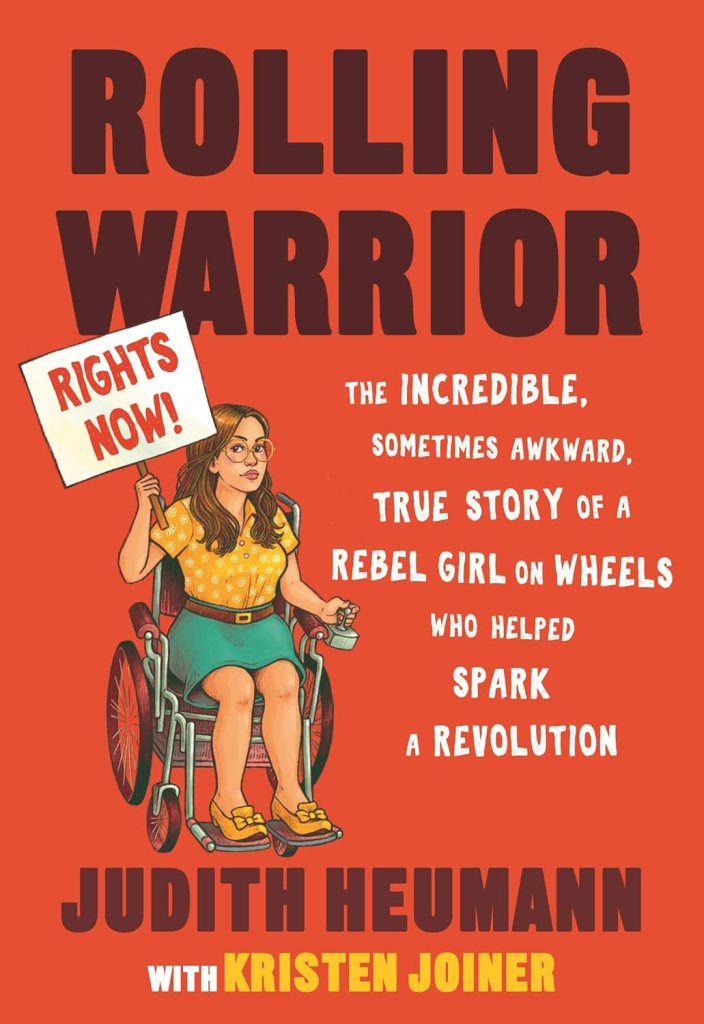
Rolling Warrior – a memoir by Judith Heumann, age 10 and up
The strapline “The incredible, sometimes awkward, true story of a rebel girl on wheels who helped spark a revolution” is not hyperbole. Judy Heumann, who died recently, was a grande dame of US disability activism – a force behind major legal and political change for American disabled people. This is a compelling adaptation of her adult memoir (review here), deftly co-written with Kristen Joiner. From the unabashed discrimination of her 1950s childhood, to the longest sit-in of a US government building (28 days, with 100+ disabled people) it’s a remarkable story. (Beacon 2021)
Disability rep: polio – wheelchair user. Many characters with other disabilities, eg MS, intellectual disability. Content note: Prologue describes Nazi eugenics, US institutional abuse of disabled people. Starts in the 1950s – includes intense ableism & discrimination.
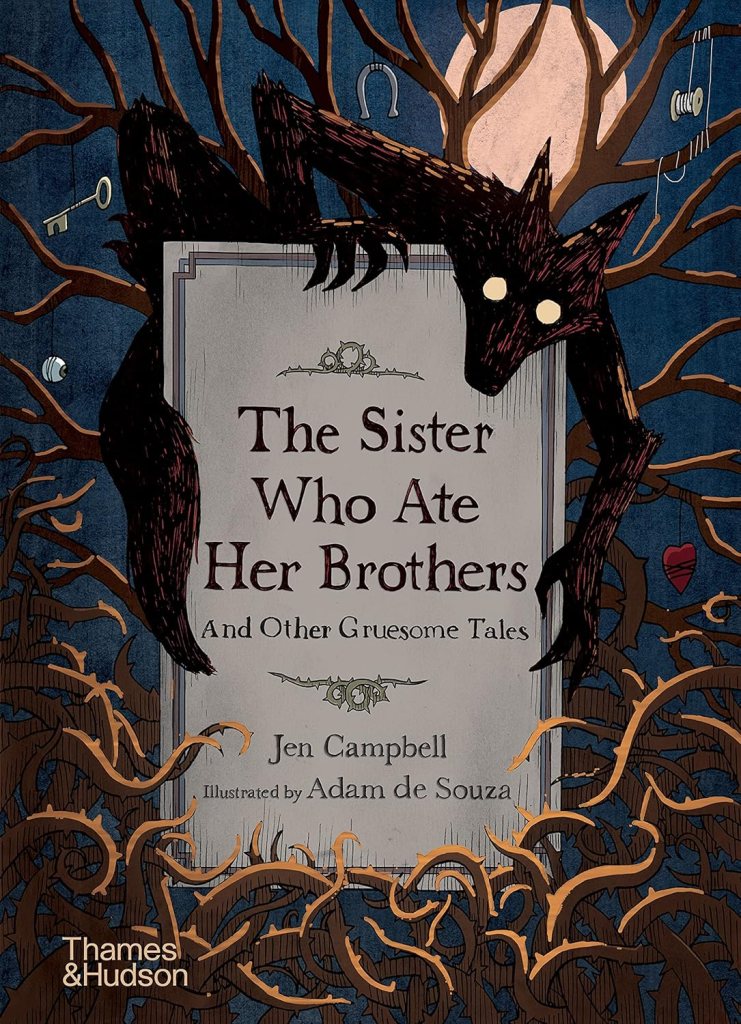
The Sister Who Ate Her Brothers – Jen Campbell, age 10+
This book of dark fairy tales includes a few disabled characters. In one story, a princess with alopecia falls in love with a woman who reads her stories. In another, when a princess’s fingers are chopped off by her vengeful father, she transforms into a mermaid, her severed fingers becoming fish. Both stories relate to author Jen Campbell‘s own disability, as detailed in the afterword. See also her YouTube history of fairytales & disability. (Thames & Hudson 2021)
Disability rep: princess with alopecia. Deaf rep in the second story. Content note: as the title implies, stories are dark and include death and dismemberment.

Disability Visibility – a non-fiction YA anthology, Alice Wong. 12+
Esteemed US activist Alice Wong brings us a YA version of Disability Visibility. These are 17 truly diverse disabled voices: a Muslim with cerebral palsy navigates Ramadan, a Black deaf-blind Harvard Law graduate describes her relationship with her guide dog, a Deaf prisoner is refused an interpreter. Highly individual stories, but common themes pop up – like feeling “not disabled enough”. Some essays are new, chosen with young readers in mind, others adapted from its adult counterpart (reviewed here). Valuable, and a speedy read. (Random House 2021)
Contributors: Maysoon Zayid, Ariel Henley, June Eric-Udoire, Jeremy Woods, Ricardo T Thornton Sr, Haben Girma, Sandy Ho, Keah Brown, Zipporah Arielle, Alice Sheppard, Mari Ramsawakh, Shoshana Kessock, Lateef McLeod, Eugene Grant, Jamison Hill, Stacey Milbern, s.e Smith
Disability rep: cerebral palsy, blindness, wheelchair users, dwarfism, facial disfigurement, ME, intellectual disability, MS, spina bifida, bipolar, lyme disease, MD. Content note: chapters carry content warnings, including sexual harassment and suicide.

On the Bright Side – a novel by Anna Sortino. Age 12+
This refreshing teen romance honestly, unapologetically centres disabled characters – swiftly debunking well-worn family stereotypes before moving briskly on. 18yo Ellie is Deaf in a hearing family, but her sister isn’t the saintly non-disabled sibling we’re so, so used to. When her (idyllic) Deaf boarding school closes and her relationship ends, she’s back with uncomprehending parents in a mainstream high school. Ellie’s infantilised, stuck with an ASL interpreter who wilfully mistranslates and fellow-students who decide she’s faking. A Schneider Honor book positively dripping with disability pride. “Anyone can become disabled”, Ellie tells her sporty love interest… (Penguin 2024)
Disability rep: one main character is Deaf and uses ASL, the other is diagnosed with MS midway through the novel. Content note: light swearing, unhelpful parents.

Chronically Dolores – a novel by Maya Van Wagenen. Age 12+
In this coming of age novel,14 year old Delores navigates a new school with chronic bladder condition interstitial cystitis. After an embarrassing end to middle school, she’s been jilted by her best friend, and now meets the delightfully named Terpsichore – autistic and until recently home-schooled. Author Maya Van Wagenen shares both Terpischore and Delores’s disabilities. Delores and her family are Mexican American, and her brother is gay. Winner of the Schneider 2025. (Dutton Books 2024)
Disability rep: chronic illness – interstitial cystitis. Content note: Delores’s brother is gay his relationship is supported by their parents.

Ugly – a YA memoir by Robert Hoge, age 12+
This enjoyable YA version of Australian author Robert Hoge‘s adult autobiography includes illustrations and photographs of the author. Ugly is an insider’s take on facial disfigurement, like the very good A Face for Picasso by Ariel Henley – below on this list. While this book is gentler than Henley’s in terms of details of surgery, Robert’s initial abandonment by his mother as a newborn in the opening chapter is distressing. This could be especially shocking for disabled child readers, so I’m recommending it for over 12s. (Puffin 2017)
Disability rep: facial disfigurement and double leg amputee. Content note: parental rejection of Robert as a newborn, bullying by children and adults.
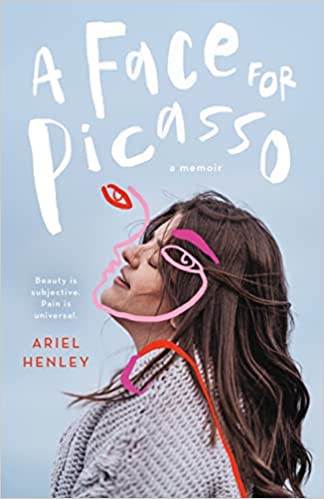
A Face for Picasso – YA memoir by Ariel Henley, age 13+
Ariel Henley’s YA memoir is certainly an antidote to Wonder, and real life is far crueller than fiction. Our expectations are up-ended – the shock of “successful” surgery which changes her and her identical twin’s faces: “we cried for months, begging to go back to the way we were before.” There’s cheerleading and prizes for being “inspirational”. Adults don’t always treat Henley with anything like the care some fiction would have us imagine, but thankfully there’s none of the parental rejection of Ugly (above) here. A Schneider Honor Book. (FSG 2021)
Disability rep: Crouzon syndrome. Content note: very graphic descriptions of surgery. Distressing bullying from adults and children.

Where You See Yourself – YA novel by Claire Forrest, 13+
In this coming of age novel, teenage Effie navigates friendship, romance, ableism, and university plans in her last year at her high school. US author Claire Forrest – a wheelchair user like Effie – brings us prom and gentle romance, a first kiss. But the background for these familiar rites of passage is the often exhausting details of navigating institutions as a wheelchair user. Effie ultimately chooses famously disability-friendly Berkley over her preferred New York university, realising otherwise – on top of being a student – “I would have to be an unpaid accessibility consultant too”. A Schneider Award Honor Book. (Scholastic 2024)
Disability rep: main character uses a manual wheelchair & can walk a couple of steps.

Sing If You Can’t Dance – YA novel by Alexia Casale, 13+
Sing If You Can’t Dance is a British teenage coming of age story with good solid disability / chronic illness representation – and a summer festival romance. After 16 year old Ven collapses on stage during a dance performance, everything changes. A chronic condition stops her dancing, and she mourns the loss. Walking can be hard, and she has to adapt to life with chronic pain. There’s romance, A Levels, friend dramas, and (refreshingly) supportive parents. There are also frustrating medical interactions, and frequent joint dislocations. Alexia Casale doesn’t sugar-coat chronic illness, or name her main character’s diagnosis – a decision I respect. (Faber 2023)
Disability rep: chronic illness, chronic pain. Content note: difficult medical encounters, frequent descriptions of dislocations.

Breathe and Count Back from Ten – novel by Natalia Sylvester, 13+
Verónica, a Peruvian-American teenager growing up in Florida, watches performing mermaids in an underwater theme park and dreams of joining them. Mermaids are another theme of this list – human here, not magical. Natalia Sylvester, who shares her character’s disability, draws on Peruvian mermaid myths and Hans Christian Andersen’s dark tale of pain and mortality. The myths speak to Verónica as she navigates disability (painful hip dysplasia), overprotective parents, and first love. Managing the transition to adulthood while disabled can be thorny. At 17, Verónica’s parents still communicate privately with her doctors, knowing more about her body than she does. She tries to draw new boundaries… Favourite line: “I’m in huge trouble with my parents because they found out I’m a mermaid”. (Clarion 2022)
Disability rep: main character has hip dysplasia, chronic pain. Content note: an encounter with questionable consent. Slut shaming by the main character’s parents.
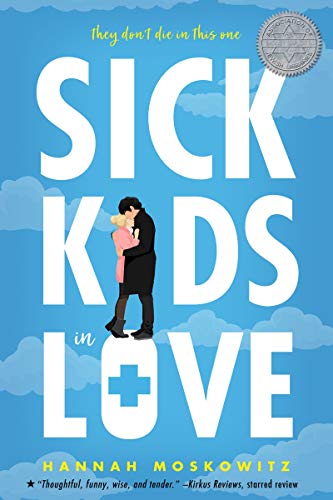
Sick Kids in Love – Young Adult novel by Hannah Moskowitz, 14+
Disabled and ill characters die with concerning frequency in fiction. This YA love story starring chronically ill teenagers was written as a counterpoint to The Fault in Our Stars, and the many books about ill teenagers who meet tragic ends. “They don’t die in this one”, boasts the cover. Whilst in reviews many disabled teens find valuable, rare representation in this book, others criticise the framing of the main character’s internalised ableism, and find her doctor-father’s ableism unresolved. Now only available from Amazon in the UK. (Entangled 2019)
Disability rep: rheumatoid arthritis, Gaucher Disease. Content note: internalised ableism – main character initially says she’s “too young” for a mobility aid. She ‘others’ people with cancer. Teenage characters have sex (without detail), and swear.

And lastly… early reading books from educational publishing, age 6+
Going right back down the ages now. Until recently I wouldn’t have been able to name any early chapter books by disabled authors, but now educational publisher Big Cat publish a whole series.
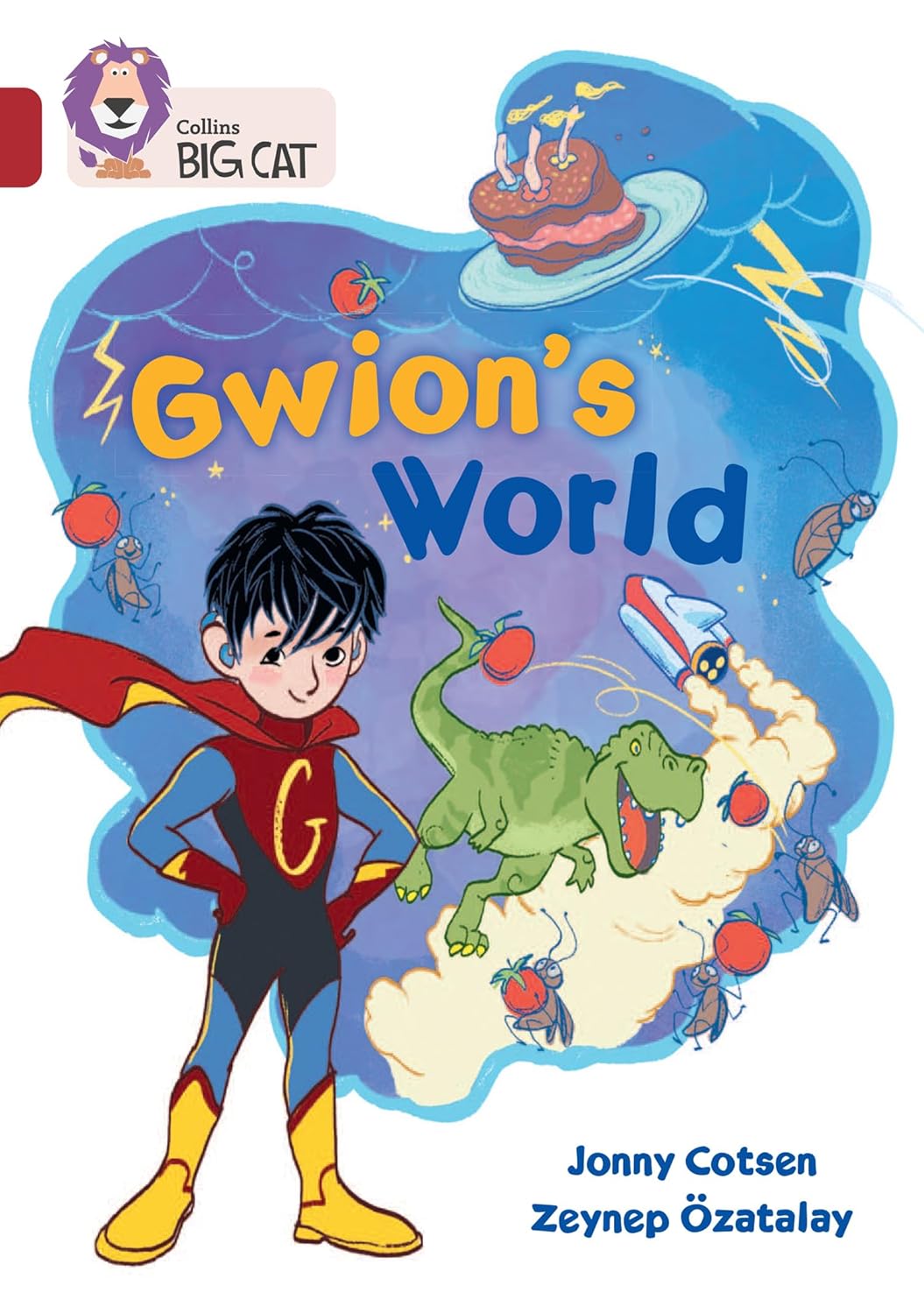
Gwion’s World – by Jonny Cotson, illustrated by Zeynep Özatalay. Age 8+
Gwion is deaf in a hearing family. He goes to speech therapy, but finds it frustrating. He feels isolated even with his family: “I sometimes ask Mum, Dad and Elis what they’re talking about, but they say, ‘Never mind’ or ‘I’ll tell you later’.” Things change when he meets a girl at school (a CODA) whose parents are Deaf – he meets her parents, and the world of sign language and d/Deaf solidarity opens up to him. An utterly lovely book, with a very different endpoint from (the brilliant) El Deafo.
Disability rep: main character is d/Deaf and uses hearing aids, meets two Deaf adults, & learns BSL
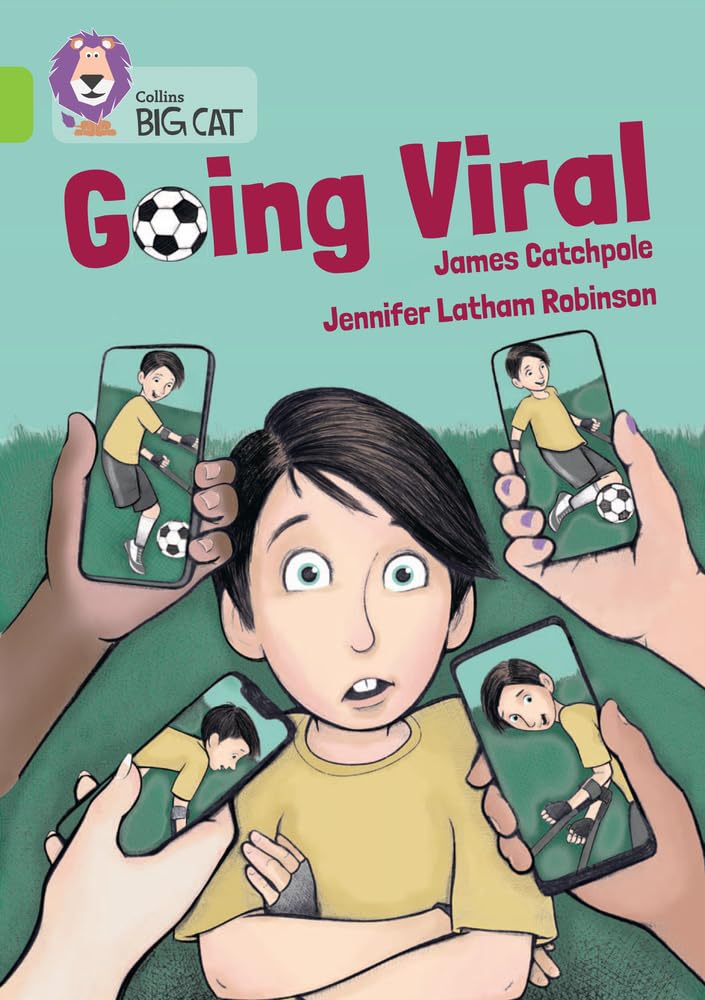
Going Viral – by James Catchpole, illustrated by Jennifer Latham Robinson. Age 6+
This book is by James: “Going Viral is the story of something that happened to me a few years ago, when I showed off a football trick to some kids in the park, who turned out to be YouTubers. A couple of million people saw the video we made, in a strange and heady 48 hours of fame. It was a good trick. Thing is, what if YouTube had been around in the 90s, when I first learned to do it? How would that viral moment have felt when I was just ten years old?” – James Catchpole
Disability rep: leg amputee using crutches
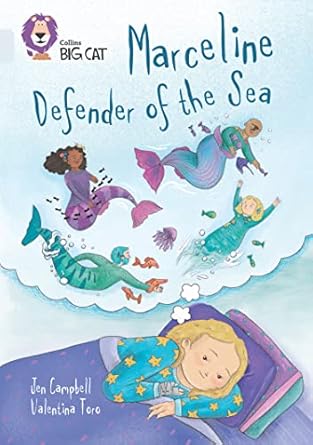
Marceline, Defender of the Sea – Jen Campbell, illustrator Valentina Toro. 9+
As her classmates prepare for holidays, Marceline prepares to go into hospital for an operation. A booklover, stories keep her company, but she has EEC syndrome – none of the heroines of fairy tales look like her. She learns about the history of fairy tales, and decides to tell her own. Favourite quote: “if everyone spoke about disability more openly, instead of calling her words like ‘special’ or ‘inspirational’, it would make her life a lot easier”. Jen Campbell‘s author of The Sister Who Ate Her Brothers, & co-editor of Owning It.
Disability rep: EEC syndrome
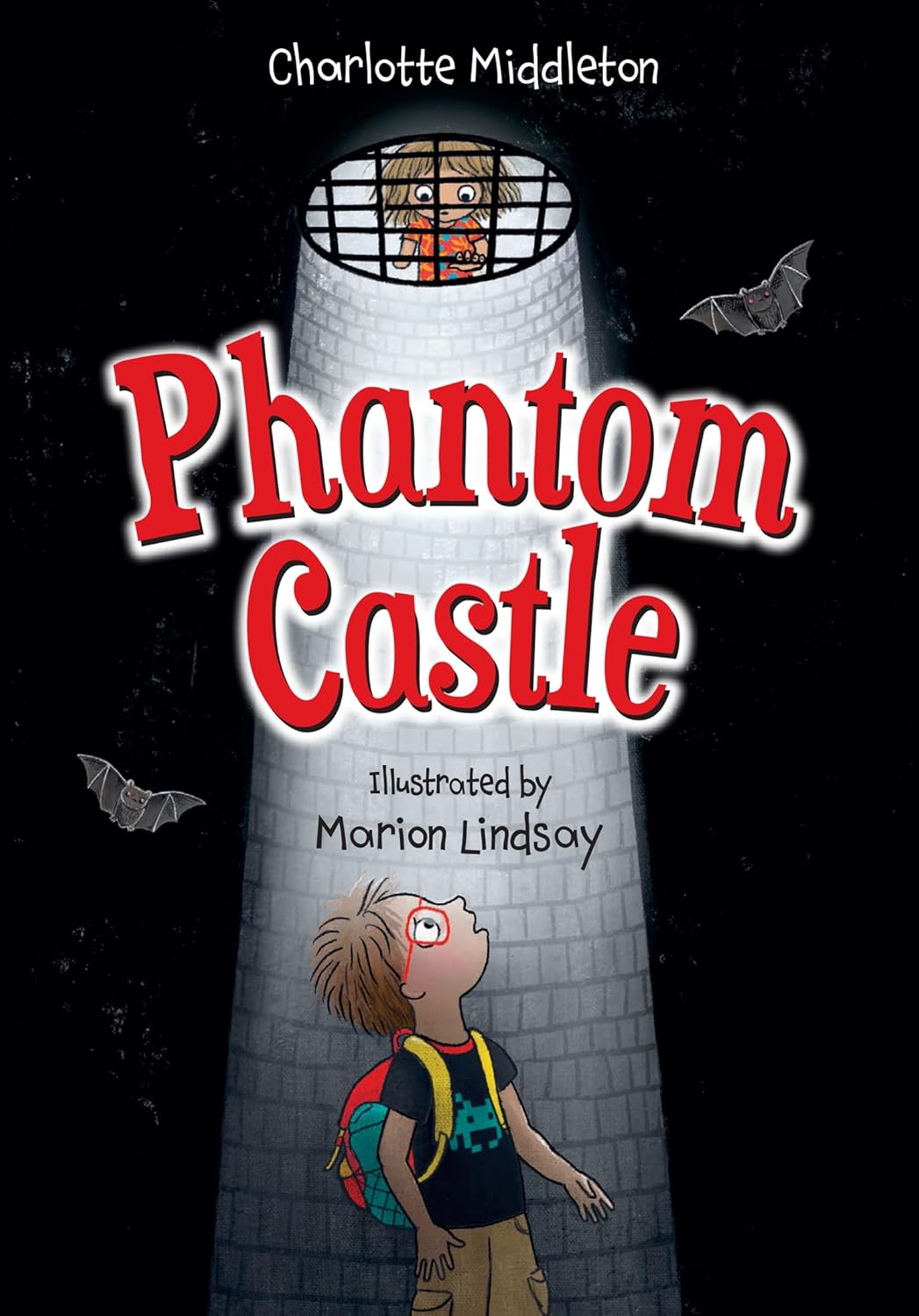
Phantom Castle – by Charlotte Middleton, illustrated by Marion Lindsay. Age 6+
In this book by Charlotte Middleton, a main characters has a limb difference (right arm). Her disability isn’t mentioned, but is visible in the illustrations. When Bel and her family visit Phantom Castle, strange things start to happen. A mishap involving a trapdoor leads Bel to brave the spooky corridors alone to find the key. But help comes from an unexpected source, and the children need to work together to uncover the mystery behind the castle’s eerie happenings. Charlotte Middleton, (who’s represented by us) has a limb difference like her character.
Disability rep: incidental – main character has a limb difference affecting one arm, which isn’t mentioned.

Monster Ranch: Paws of Doom – by Sarah Allen, illustrator Ash Roy. Age 6+
This enjoyable story starts strong: “When your parents tell you that there are no monsters under your bed, they’re telling the truth. They’re under mine.” Author Sarah Allen says: “Writing ‘Monster Ranch’ was an absolute delight, bringing together my experience growing up with Turner syndrome with my love of critters and creatures of all kinds. Growing up, I didn’t see my experience with a genetic disorder in the books that I read or movies I watched, and it is so much fun and such an honour to share stories of girls like me having wonderful adventures.”
Disability rep: Turner Syndrome
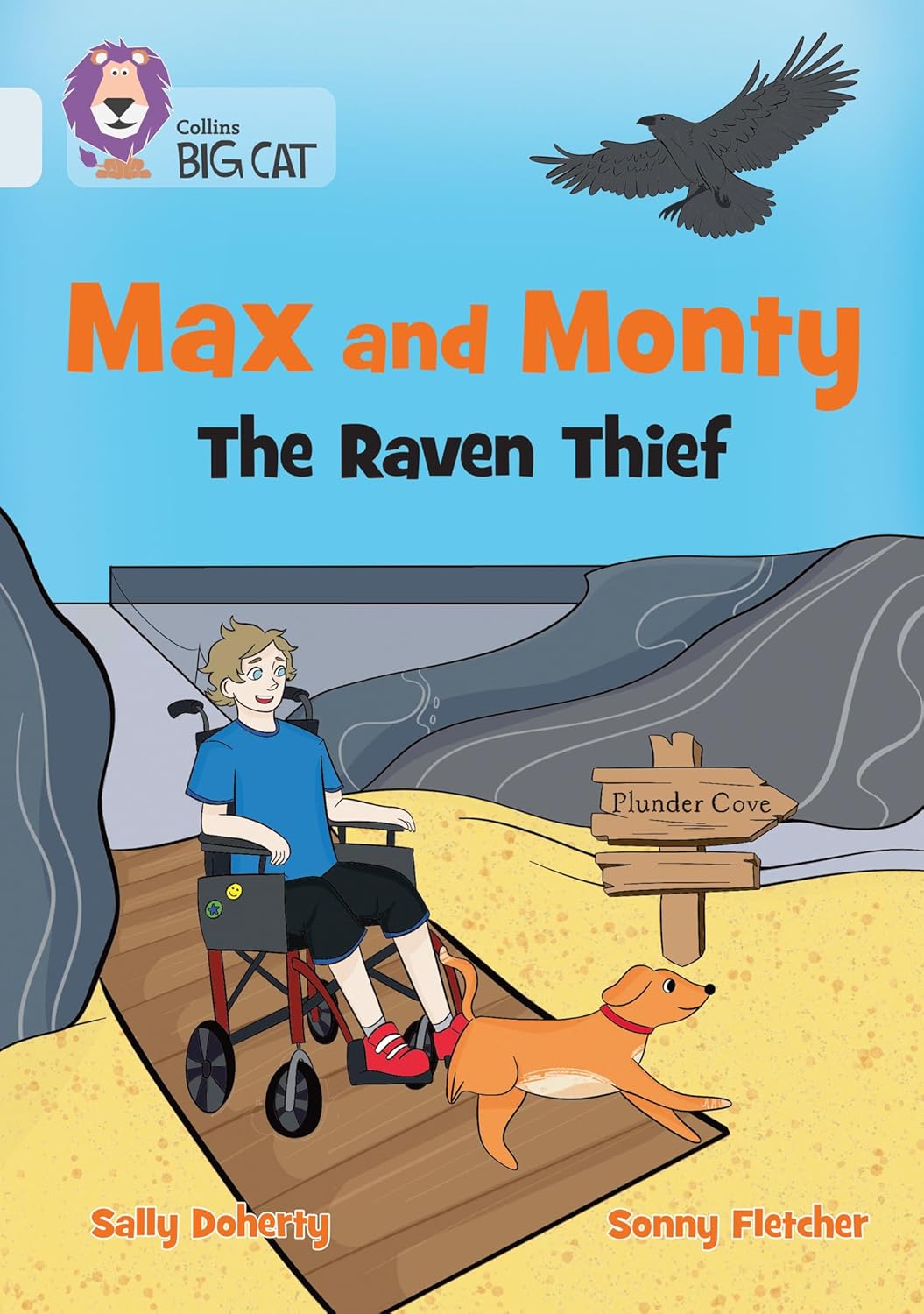
Max and Monty: The Raven Thief – Sally Doherty. 9+
Author Sally Doherty is an ambulatory wheelchair user with ME who feels strongly about the very real stigma around wheelchair users who can walk – and the disbelief they often encounter. And this theme is woven into an adventure story involving a beachside burglary, and ice-cream shop, and a trained raven. Like her main character, Sally’s disability means she spends a lot of time resting and sometimes uses a wheelchair. Find more of her thoughts about the book here.
Disability rep: ME, ambulatory wheelchair user
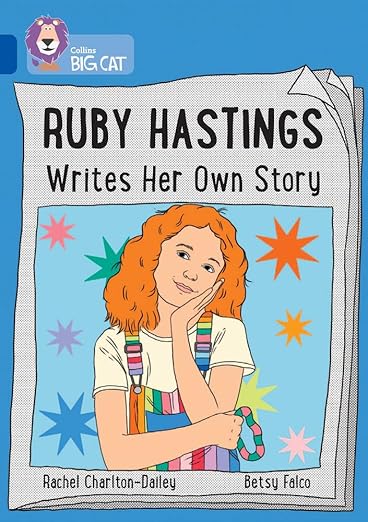
Ruby Hastings Writes Her Own Story – by Rachel Charlton-Dailey, illustrated by Betsy Falco. Age 8+
11 year old Ruby Hastings loves writing, and looks up to a local disabled journalist. But her dyspraxia brings challenges, and not all her teachers are understanding. Devastated when her stories are rejected by the school newspaper, she starts her own… Rachel Charlton-Dailey is a journalist, she shares Ruby’s disability.
Disability rep: main character has dyspraxia. Also represented: wheelchair user, dyslexia & blindness.
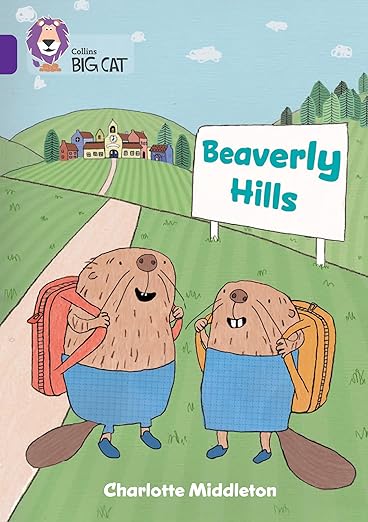
Beaverly Hills – written and illustrated by Charlotte Middleton. Age 6+
A story about a beaver with teeth that are much smaller than the rest of the beavers’ – who finds that this disability has a definite upside.
Charlotte Middleton has been disabled all her life. She’s the author-illustrator of Christopher Nibble, which has been adapted into a popular puppet show, touring across the UK.

Audrey Fry is a spy! – by Jen Campbell, illustrated by Davide Ortu. Age 5+
Audrey has alopecia, and an impressive selection of wigs – which she uses to become a spy. She solves household mysteries, like – where has her pet hamster gone? Another book by Jen Campbell – of The Sister Who Ate Her Brothers, and Marceline, Defender of the Sea.
Disability rep: main character has alopecia.
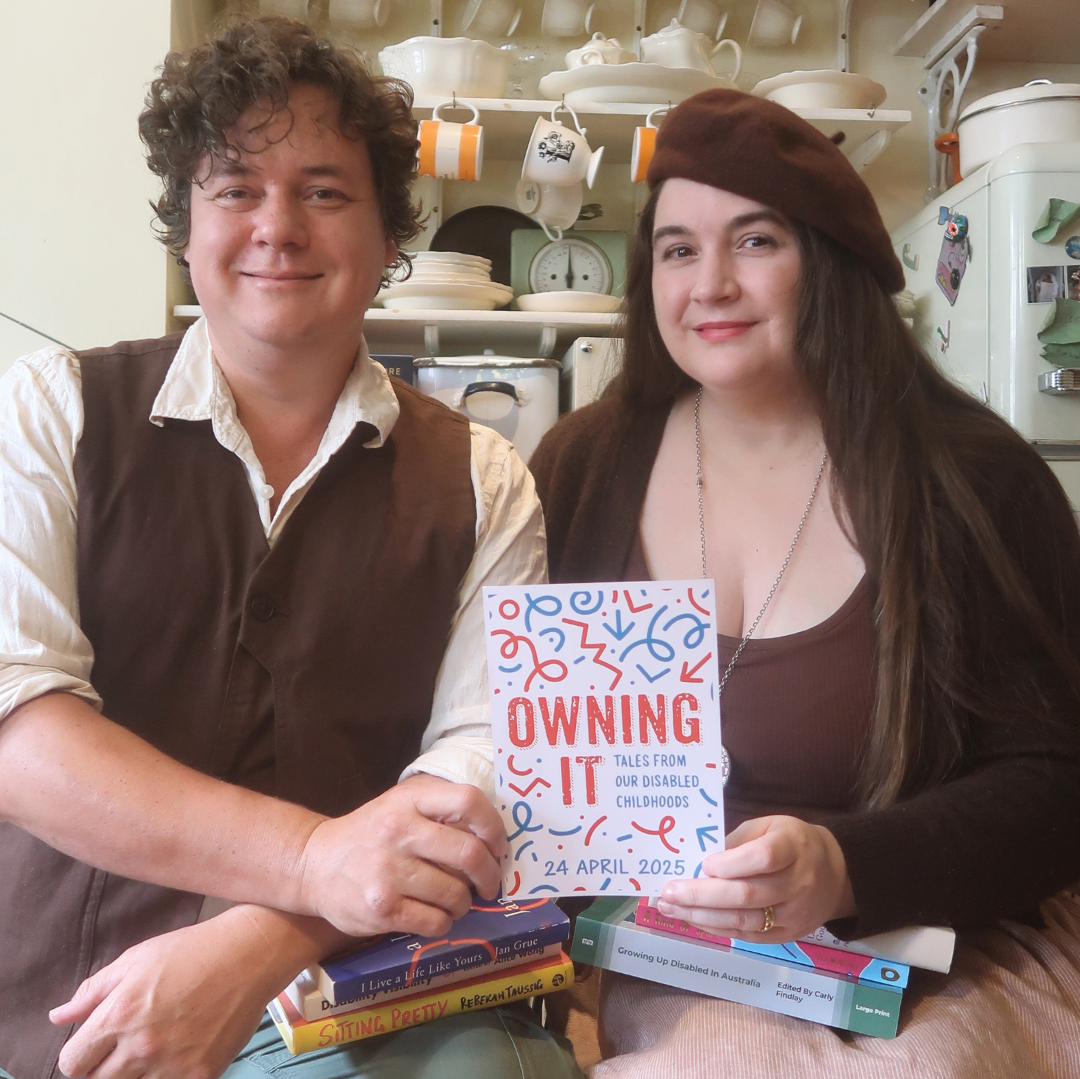
Who are we?
We’re Lucy and James Catchpole, we’re both disabled, and we run the Catchpole Agency – a children’s literary agency – and sometimes write too. You can find us most reliably on Instagram.
Books by Lucy and James may interest you.
And if you’d like to support us, we get a small percentage of orders made through the links on this page.
Disability History Month – some resources:
- This is a link to the UK Disability History Month page.
- We have lesson plans for our picture books, you can find the What Happened to You lesson plan here, and the Mama Car lesson plan here.
- Disability in children’s books – some thoughts for teachers.
- I looked at the slogan Justice Not Charity – first used by blind marchers in the 1920s in this blog post.
- Our most popular post – 20 books by disabled authors.

[Image description:
- Text reads: ‘Our big list of children’s books by disabled authors / Disability History Month / Chosen by disabled reviewers’. Image behind: a collage of jpgs of most of the books in this list – all named in the banner images just below.
- Banner 1 – a collage – jpgs of picture books for age 2 and up – Can Bears Ski, Mama Car, Best Day Ever! This Beach is Loud! What Happened to You? Moonlight Zoo, Monster Hands, Come Over to My House.
- Banner 2 – collage – jpgs of picture books for age 4 and up – You’re So Amazing! Terrible Horses, A Kids Book About Disability, We Are the Scrappy Ones, I Am Not a Label, We Move Together, I Am You Are.
- Banner 3 – a collage – jpgs of middle-grade books for age 8 and up – El Deafo, The Chance to Fly, Cosima Unfortunate, Owning It, Keedie, A Kind of Spark, How to Be Disabled and Proud, The Secret of Haven Point, Frankie’s World, Wilder than Midnight.
- Banner 4 – collage – jpgs of middle-grade to YA books for age 10 and up – The Sister Who Ate Her Brothers, Rolling Warrior, Where You See Yourself, Disability Visibility, Chronically Delores, On the Bright Side, Ugly, A Face For Picasso, Breathe and Count Back from Ten.
- Banner 5 – collage – jpgs of early reading books – Beaverly Hills, Audrey Fry is a Spy, Going Viral, Gwion’s World, Marceline Defender of the Sea, Ruby Hastings Writes Her Own Story, Phantom Castle, Monster Ranch – Paws of Doom, Max and Monty.
- Subsequent images are jpgs of the book covers.]
 The Catchpoles
[…] on Instagram), but people keep finding this list! Which is lovely. We now have a big list of children’s books by disabled authors, […]
LikeLike