Lucy and James Catchpole
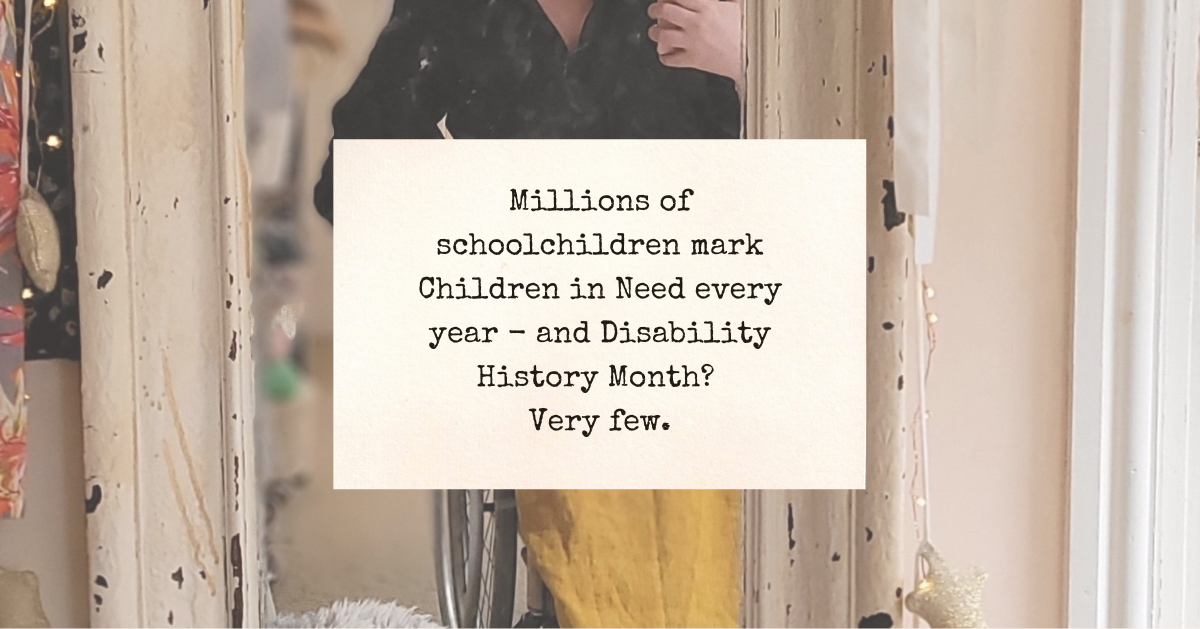
Millions of UK schoolchildren mark Children in Need every year – dressing up for school and collecting money for charity. And Disability History Month? Very few. And what do these millions of children learn from this? All their school lives, they watch sad disabled children on Children in Need – their lives transformed by mood music and your charity.
How can that not affect how they see disabled people, what they expect of us?
I’m not blaming teachers for this – Children in Need is a big established charity. Disability History Month is not. It’s easy for a school to opt in to Children in Need – Disability History Month must be a greater challenge.
But we’re all affected by these things – did all those images of starving Africans in my childhood affect how I saw Africa? Absolutely. (Fuse ODG is spot on about Band Aid.)


If you haven’t seen Nina Tame’s Children in Need Instagram post, have a look. Some of the comments are fascinating, especially from people who have been involved – either as a child themselves, or as a parent of a disabled child. (Sad faces really are mandatory, it seems.)
This was all a bit hopeless, I know. But there are some resources out there – just below, and thoughts on how they could be used.
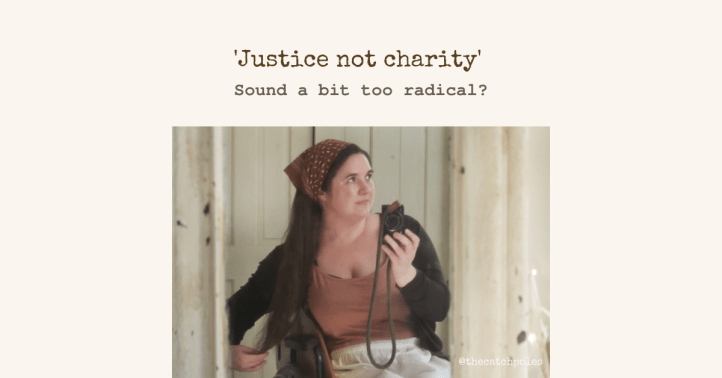
I’ve also written about the complicated relationship between disability and charity before here – in Disability and charity – it’s complicated, and ‘Justice Not Charity’ – too radical?.

Resources for Disability History Month
Lesson plans
Though not specifically for Disability History Month, we have thorough, free to download lesson plans for our three picture books – put together by teachers, with us.
The Mama Car plan was created with Lucy by Katie Renker – a teacher who’s a wheelchair user. For older age brackets (up to KS4), Katie included videos to prompt discussions about how disabled people are portrayed in media etc. (And specific curriculum guidance for England, Wales & Scotland.) What Happened to You is our most popular lesson plan, downloaded daily. And You’re So Amazing is a book that engages specifically with the stories we tell about disability – now with its own lesson plan.
Books for Disability History Month

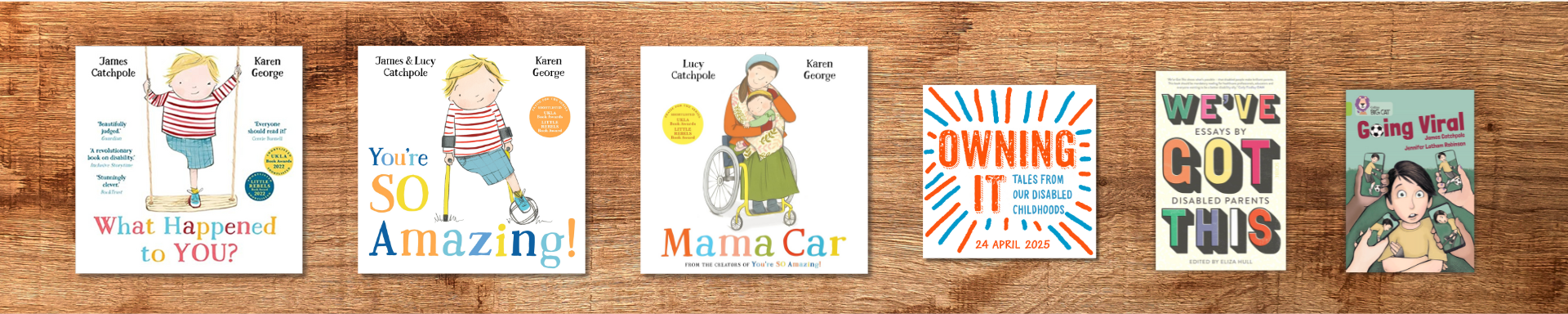
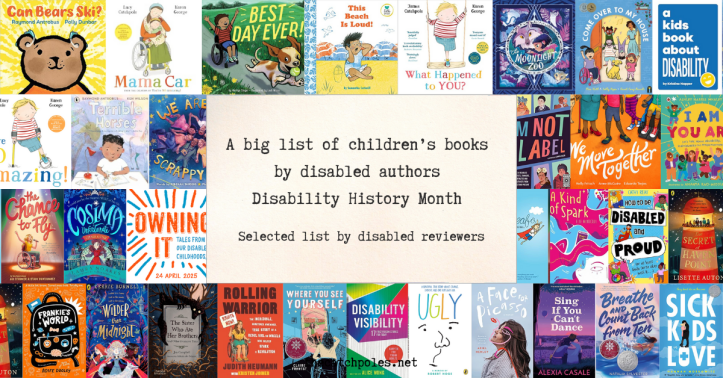
There’s a short list of favourite books we’d recommend for Disability History Month just above. All are by disabled authors. And we have a longer list, too.
Books that engage with history
For teachers focusing strictly on history, I Am Not a Label, El Deafo and Owning It may be particularly useful.
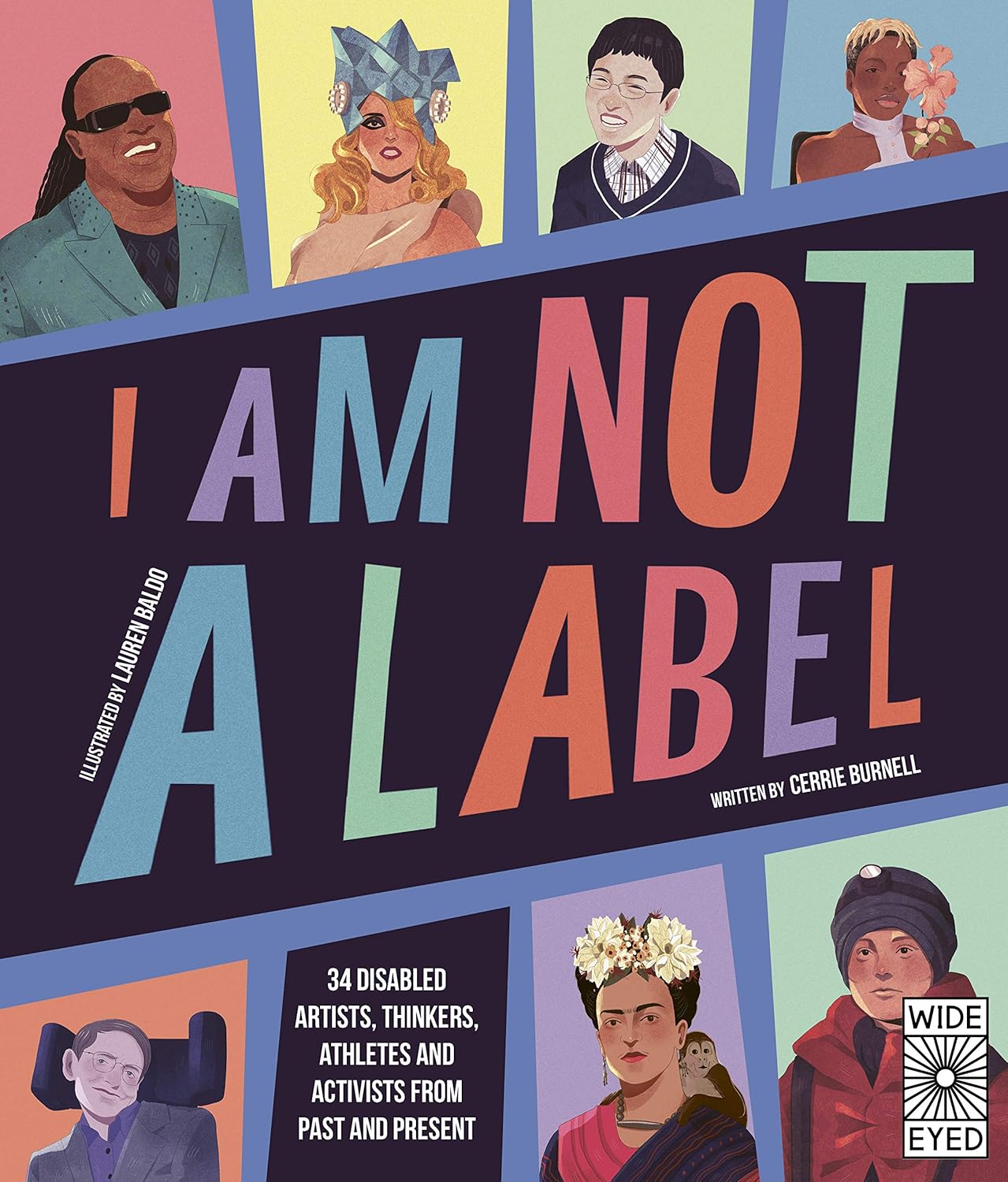
For Key Stage One (age 6 and up), I Am Not a Label is an excellent non-fiction picture book – a short and extremely stylish biography of 34 notable disabled people, all written by Cerrie Burnell. You can read our review here.
For age 9 and up – Key Stage Two – in Owning It: Tales From Our Disabled Childhoods, 22 disabled authors tell true life stories from their own childhoods, spanning the late 20th and early 21st century (out in spring 2025, read our post about Owning It here). And there’s El Deafo, also for 9 and up, a graphic novel about one US child’s experience of deafness growing up in the 1970s (the main character’s nominally a rabbit, but it’s basically autobiography with rabbit ears attached). Our El Deafo review here.

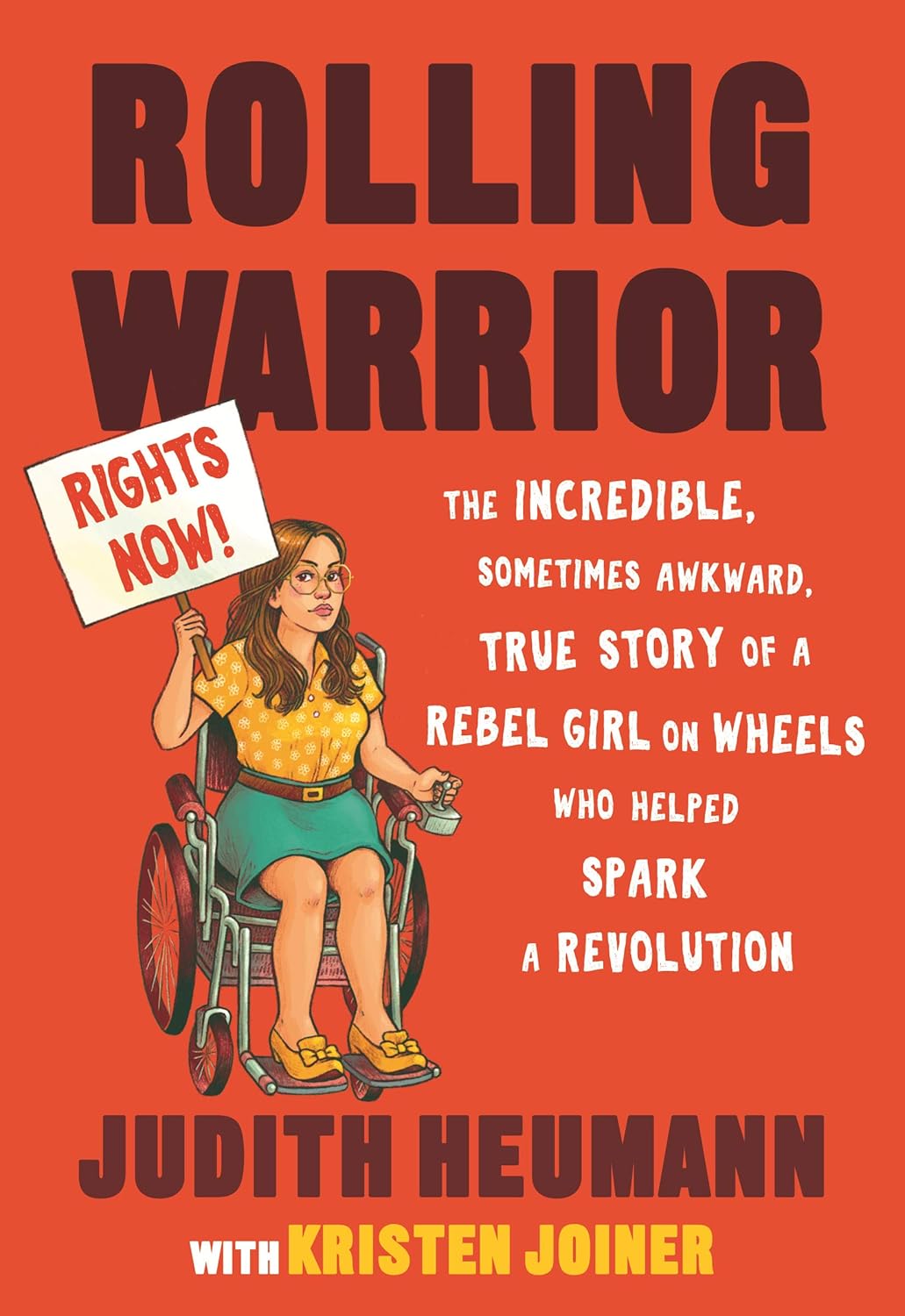
I should also mention the US autobiography Rolling Warrior by Judy Heumann, for older children (Key Stage Three and Four). It goes back further in time – starting with Heumann’s 1950s childhood (we have a short review here). And another US book – Disability Visibility, the YA version. (Reviewed here.)
Books with general disability representation
Most teachers I know who are marking Disability History Month are using it as a jumping off point for discussing disability, rather than a deep historical enquiry. The other books on this list are well suited for this.
For young children, my book Mama Car – which aims to present the idea of a wheelchair as just one tool, part of a family’s everyday life – is pitched youngest, and works well for nursery and EYFS (as well as the lesson plan, we have colouring sheets).
For Key Stage One, Can Bears Ski? and What Happened to You? prompt children to empathise with and put themselves in the place of the disabled child character – to imagine what it’d be like to field intrusive questions in What Happened to You? and to realise you’re deaf in Can Bears Ski. Our Can Bears Ski? review is here, and we have a lesson plan for What Happened to You?


For Years 2, 3 and 4, our picture book You’re So Amazing! is about the ways people respond to disabled people, as one-legged Joe finds himself called ‘amazing’ for doing very ordinary things. It’s a good jumping off point for thinking about the different stories we tell about disabled people, especially in the context of Children in Need and other charities. (We also now have a lesson plan.)
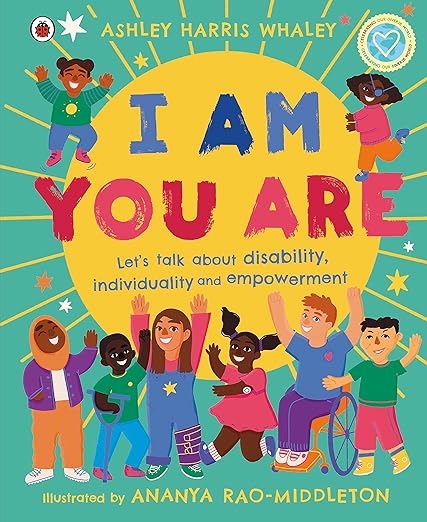
For the same age group, I Am You Are is a cheerfully illustrated non-fiction picture book for age 6+ which goes from the very basics – what is disability? What is ableism? and looks at specific disabilities too – eg what is neurodiversity?

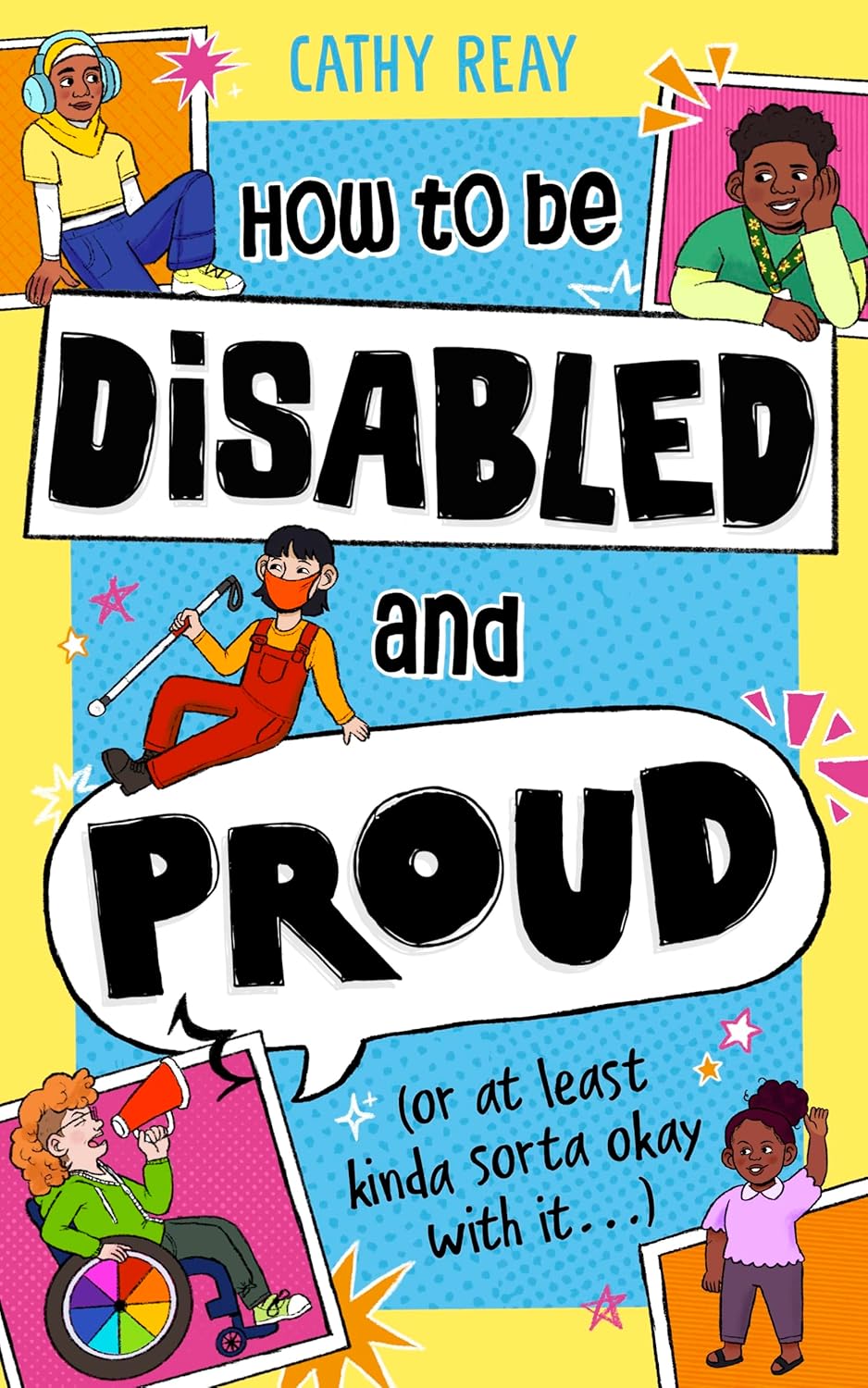
Keedie for age 9+ is an excellent novel about an autistic teenager (the previous book in the series – A Kind of Spark – is now a BBC tv series). And also for 9 and up, Cathy Reay’s non-fiction book How to Be Disabled and Proud (out in spring 2025) includes interviews with a number of disabled people, for a range of perspectives.
Ordering books?
If you’d like to order any of these books, Blackwell’s offer free international delivery – we get a small percentage from orders made through these links. It’s lovely when they’re used, thank you!
- I Am Not a Label by Cerrie Burnell
- Owning It: Tales From our Disabled Childhoods – to pre-order
- El Deafo by Cece Bell
- Rolling Warrior by Judith Heumann
- Mama Car by Lucy Catchpole
- Can Bears Ski? by Raymond Antrobus and Polly Dunbar
- What Happened to You? by James Catchpole
- You’re So Amazing! by James and Lucy Catchpole
- I Am, You Are by Ashley Harris Whaley
- How to Be Disabled and Proud – to pre-order
- Keedie by Elle McNicoll
This whole resources section was a bit off the cuff, but I hope it’s helpful for someone.
~ Lucy (with James) Catchpole
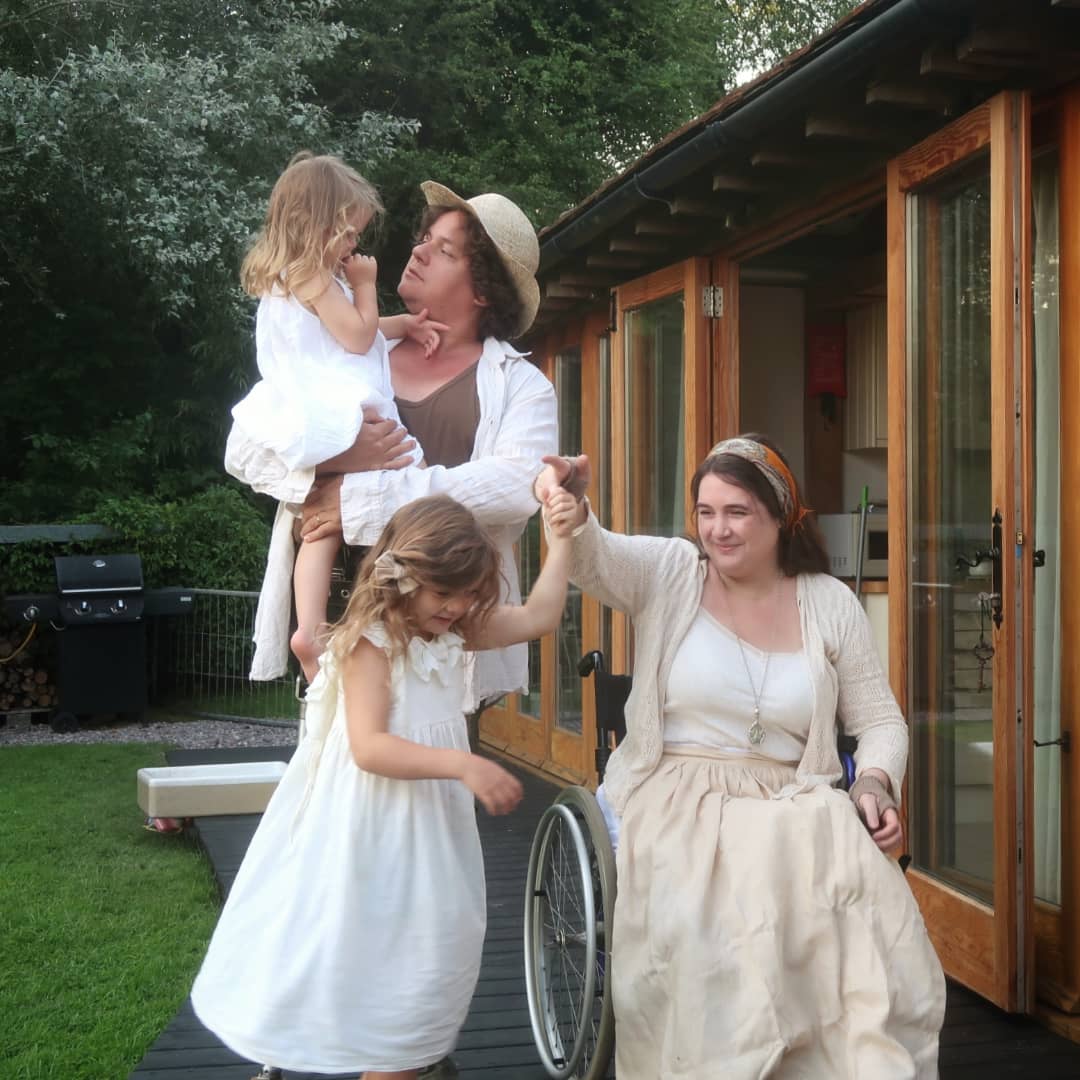
Lucy and James run a children’s literary agency, and are children’s authors.
In case you missed the links above, you might be interested in our page of resources for teachers, and our big list of children’s books by disabled authors.
More about all books by James and Lucy Catchpole here.

[Image descriptions:
- Text: ‘Millions of schoolchildren mark Children in Need every year – and Disability History Month? Very few.’
- ‘What do they learn from this? All their school lives, they watch sad disabled children on Children in Need – their lives transformed by mood music and your charity.’ Image behind is a mirror selfie of Lucy in her manual wheelchair (you can’t see her face, but her honey coloured linen skirt is lovely). The same photo is behind the next two images.
- ‘How can that not affect how they see disabled people, what they expect of us?’
- ‘Disability and charity – it’s complicated.’
- Text reads: ‘”Justice not charity” Sound a bit too radical?’ A photo of me in my wheelchair – I’m a white woman with long hair, wearing a bandana in my hair.
- A collage of book covers to mark Disability History Month. In a 3 by 3 grid, the central square reads ‘Excellent books by disabled authors / Disability History Month’. The books are: I Am Not a Label: 34 disabled artists, thinkers, athletes and activists from past and present. El Deafo. Can Bears Ski? Owning It: tales from our disabled childhoods. Keedie. I Am You Are: Let’s Talk About Disability, Individuality and Empowerment. How To Be Disabled and Proud. What Happened to You? You’re So Amazing! and Mama Car. Text next to them reads ‘we have lesson plans for these 3’
Individual book covers:
- I Am Not a Label 34 disabled artists, thinkers, athletes and activists from past and present by Cerrie Burnell, illustrated by Lauren Baldo. Cover has a black background, with stylised portraits of amongst others, Stevie Wonder and Frida Kahlo. Portraits have pastel backgrounds. a non-fiction picture book with stylised illustrations.
- Owning It: tales from our disabled childhoods – a middle-grade anthology, it’s a placeholder cover, and reads ’24 April 2025′.
- Rolling Warrior: The incredible, sometimes awkward, true story of a rebel girl on wheels who helped spark a revolution. By Judith Heumann with Kirsten Joiner. Cover is red, with an illustration of Judy as a young woman, in a vintage wheelchair holding a ‘RIGHTS NOW!’ protest sign.
- Mama Car by Lucy Catchpole. Picture book – a mother in her wheelchair with small child on her lap.
- Can Bears Ski? by Raymond Antrobus and Polly Dunbar – a picture book. On a bright yellow cover, a young illustrated bear looks out, wearing hearing aids.
- You’re So Amazing! by James and Lucy Catchpole – a one-legged child on the cover with a football.
- I Am You Are: Let’s Talk About Disability, Individuality and Empowerment – a non-fiction picture book with an illustrated green-blue cover – a group of diverse children with different disabilities.
- Keedie by Elle McNicoll – a middle-grade novel. Cover is yellow and purple, illustration of a teenager with long, flowing blue hair, wearing headphones.
- How To Be Disabled and Proud – middle-grade non-fiction, a bright yellow cover with 5 children with different disabilities illustrated in a bold palette. ]
 The Catchpoles