Actual disabled people talk disability in picture books
Reviews by Lucy and James Catchpole

El Deafo is a very funny, real, own voices autobiographical graphic novel about a deaf rabbit.
If Mama Zooms was personal for us, this is out of our comfort zone – neither of us is deaf. Or a rabbit. (Though really, the characters are humans with rabbit ears. Animal stories not your thing? Stay with me.)disability book lists
So does this qualify as an own voices review? Well, no. Though being disabled does give me an edge. I have read all the reviews by deaf, hard of hearing and culturally Deaf people I could find – do seek them out.
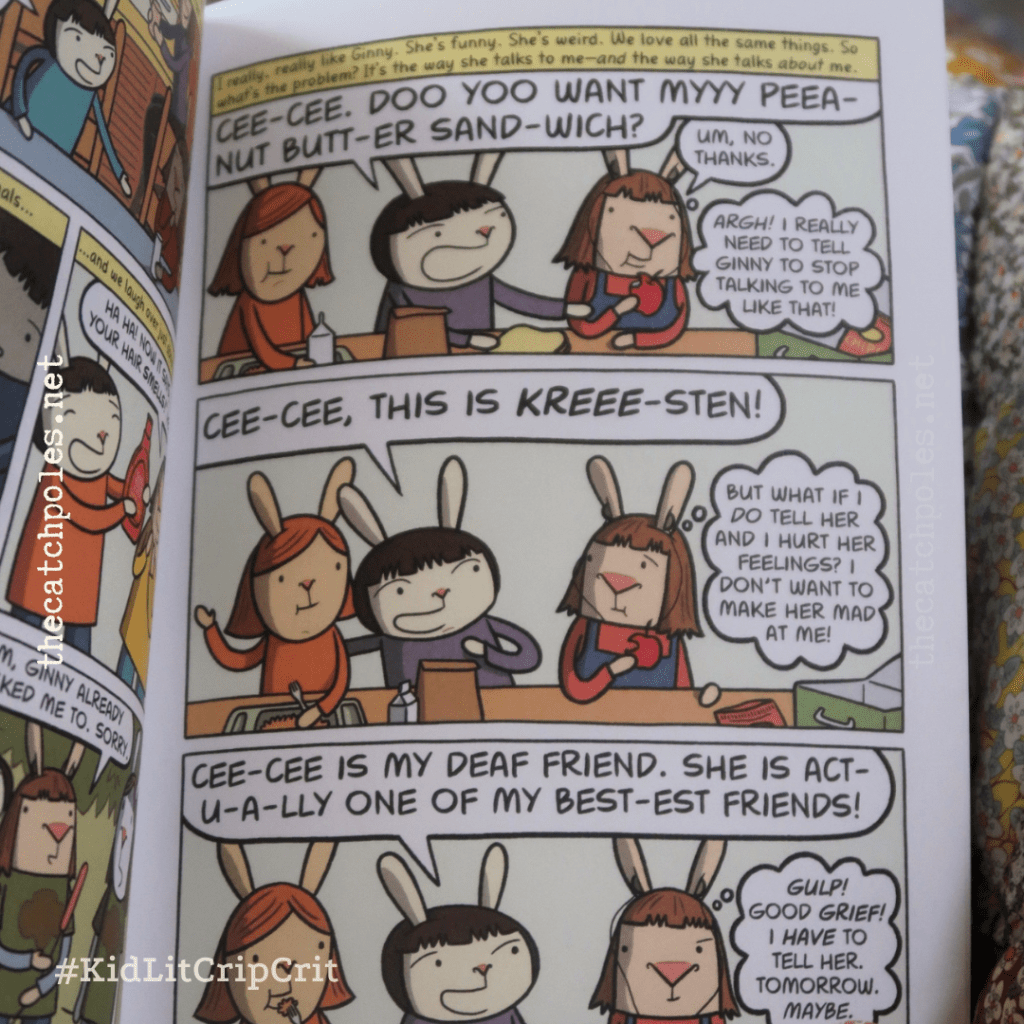
Words every deaf child longs to hear shouted, I’m sure…
While I believe author and illustrator Cece Bell doesn’t identify as disabled, this book is own voices at its finest. An intensely personal story – Cece becomes deaf, goes to school, friendships are made and breakdown. This is one 1970s, messy and individual experience of deafness. (With a small ‘d’ – a note at the end explains she is not part of Deaf culture or community.)
Personal stories have power when it comes to disability, because it just isn’t a viewpoint we’re used to hearing. Our stories are usually told through the distorted lens of narrative device, or by people adjacent to us – yet who crucially are not us.

Bell does not pander to hearing readers – she entirely centres the experience of the deaf character. This is refreshing. It stands out, making me realise quite how rare this is. We see the many ways Cece’s fellow pupils get it wrong and wince – at the shouting (which does not help), the virtue-signalling, the patronising comments. Readers learn as a by-product of seeing these scenarios unfold, feeling Cece’s irritation. Which is surely the best way.
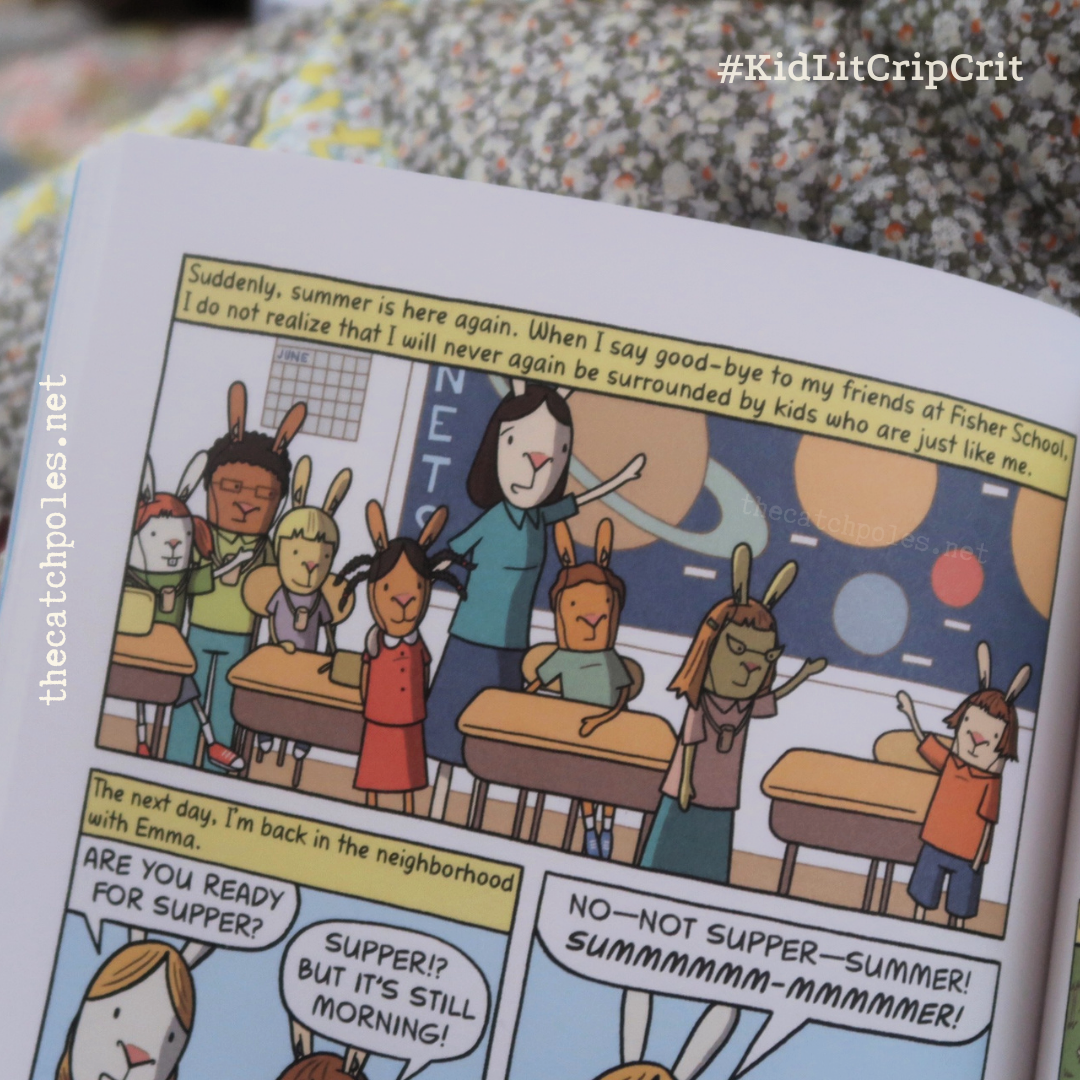
For someone like me – never a disabled child, with no experience of non-mainstream education – Cece’s experience of classes with other deaf children is eye-opening. What we might naively imagine to be a negative experience (it is segregation, after all) instead seems validating. When she’s moved into mainstream education:
“I will never again be surrounded by kids who are just like me.”
It seems a terrible loss.
Illuminating as it is, El Deafo is the story of one individual. As readers we need to be wary of the “danger of a single story”. Cece Bell makes clear in her author’s note this book is her deaf experience – she is not attempting to conjure the D/deaf experience.
This is important because with stories of disability so few, they’re always in danger of being universalised. Cece’s ambivalence about sign language, for example, should be understood as an individual reaction to circumstances, not a norm. And the 70s tech shown is outdated and no longer in use. This is probably obvious to an adult reader, but worth spelling out to children.
I know the title El Deafo puts some off (me included, honestly), but I’d urge you to read it. While Mainie (age 5) loves it, it’s really a book for older children and adults, who will whizz through this delightful, funny graphic novel.
– Lucy Catchpole

If you’d like to, you can order El Deafo here through Blackwell’s – we make a small percentage from each sale. And you can find our whole list on Bookshop UK and Bookshop US.
For more of our favourite illustrated books with the best disability representation, have a look at the others in the KidLitCripCrit series..
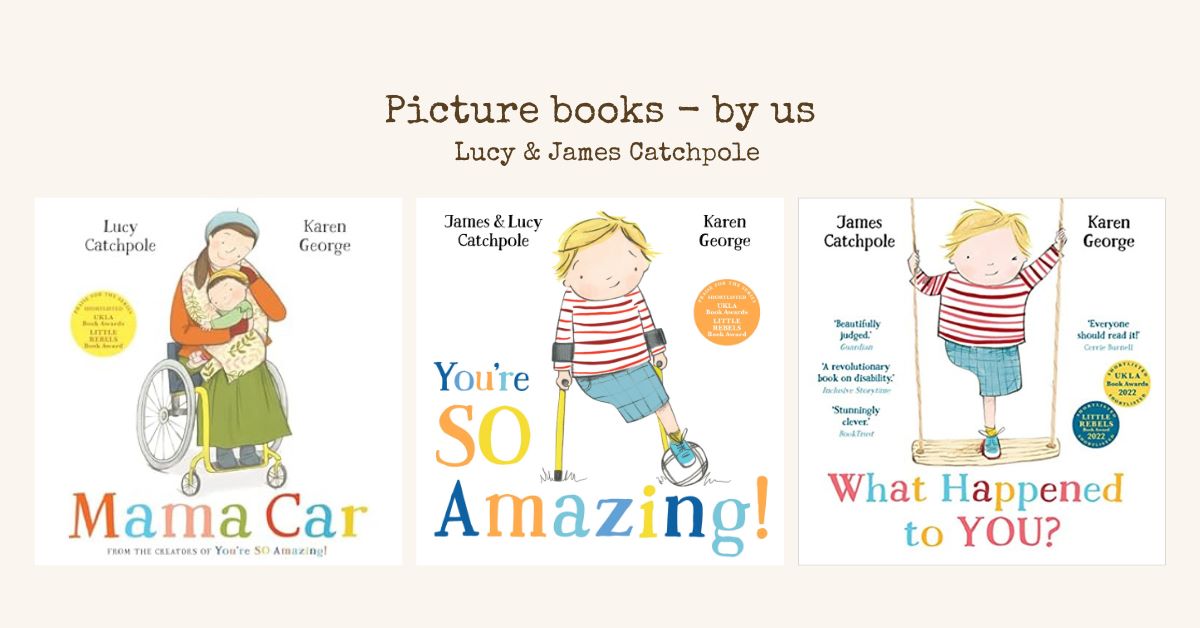
And if you’ve got this far and would like to find out about the books we’ve written ourselves, do have a look at our new page books by Lucy and James – it’s one page, with all our books. So should have been quick and simple to make. And yet.
This review was first posted on Instagram on the 31st August 2020. I’ve stuck a couple of bonus images from that post below.

[Image descriptions:
Image 1: Mainie (a 5yo white girl) is wearing a red cape & rabbit ears & holding a copy of El Deafo. She’s looking off to the side and is standing in a superhero pose. Text reads: weekly reviews by actual disabled people (not her – she is not disabled. And is 5.)
Image 2: Inside pages – Cece sits with 2 friends. One shouts ‘CEE-CEE IS MY DEAF FRIEND. SHE IS A-CT-UALLY ONE OF MY BEST-EST FRIENDS’
Image 3: Cece holds up signs with simple messages on, two read ‘shouting is NOT good’, & ‘hands in front of mouth are also bad news’. The hearing characters speak back in nonsense, eg ‘foo gah bee ahfah’.
Image 4: Another close up of inside pages – Cece, a child-rabbit, stands in a classroom with other child-rabbit friends with hearing aids. Writing at the top reads: ‘When I say good-bye to my friends at Fisher school, I do not realise that I will never again be surrounded by kids who are just like me.’
Image 5: Books stack: all books on our KidLitCripCrit book list.
Image 6: A photo of Mainie – James is holding her up as though she’s flying. Text reads: Cece doesn’t actually fly in El Deafo. But any excuse.
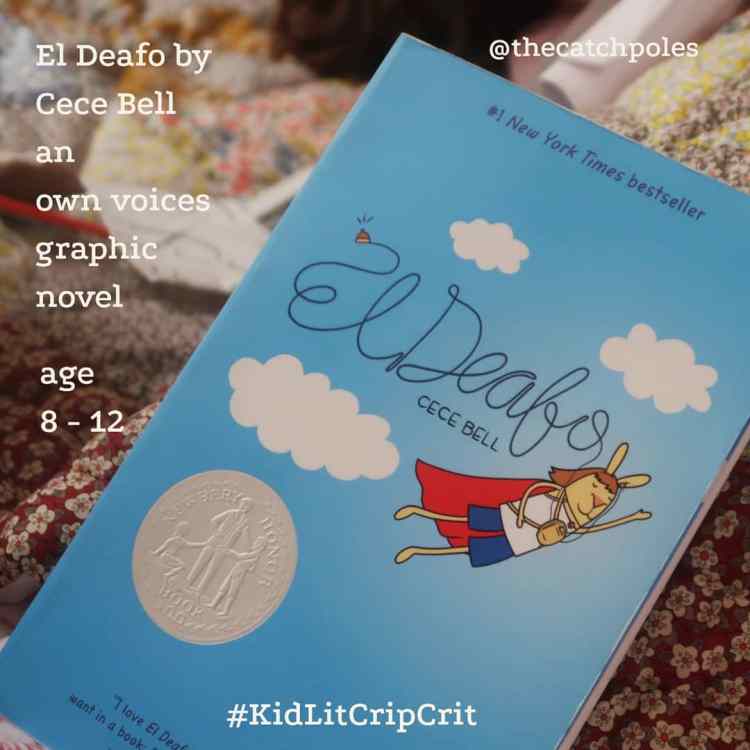
Image 7: A close up of El Deafo – a graphic novel, standard paperback size. It’s blue with a rabbit / girl dressed as a superhero on the front. Text reads: El Deafo, an own voices graphic novel, age 8 – 12.]


[…] Kid Lit Crip Crit: Review by Disabled Blogger […]
LikeLiked by 1 person
[…] and they should be. By seeing the world through the eyes of an actual disabled person, like in El Deafo, children can really learn about the experience of […]
LikeLike