By James and Lucy Catchpole
We’re seeing more and more disabled characters pop up in picture books. Maybe disability is finally having a moment.
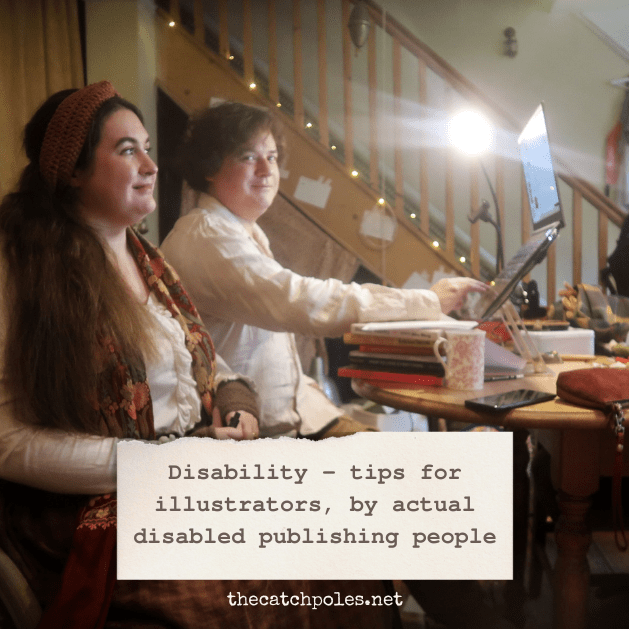

Since we posted our disability tropes in picture books, we’ve been asked for something similar just for illustration.
There are wonderful examples of beautifully illustrated disabled characters out there. Here are some from our favourite illustrated books with disabled characters – by a mix of disabled and non-disabled illustrators.


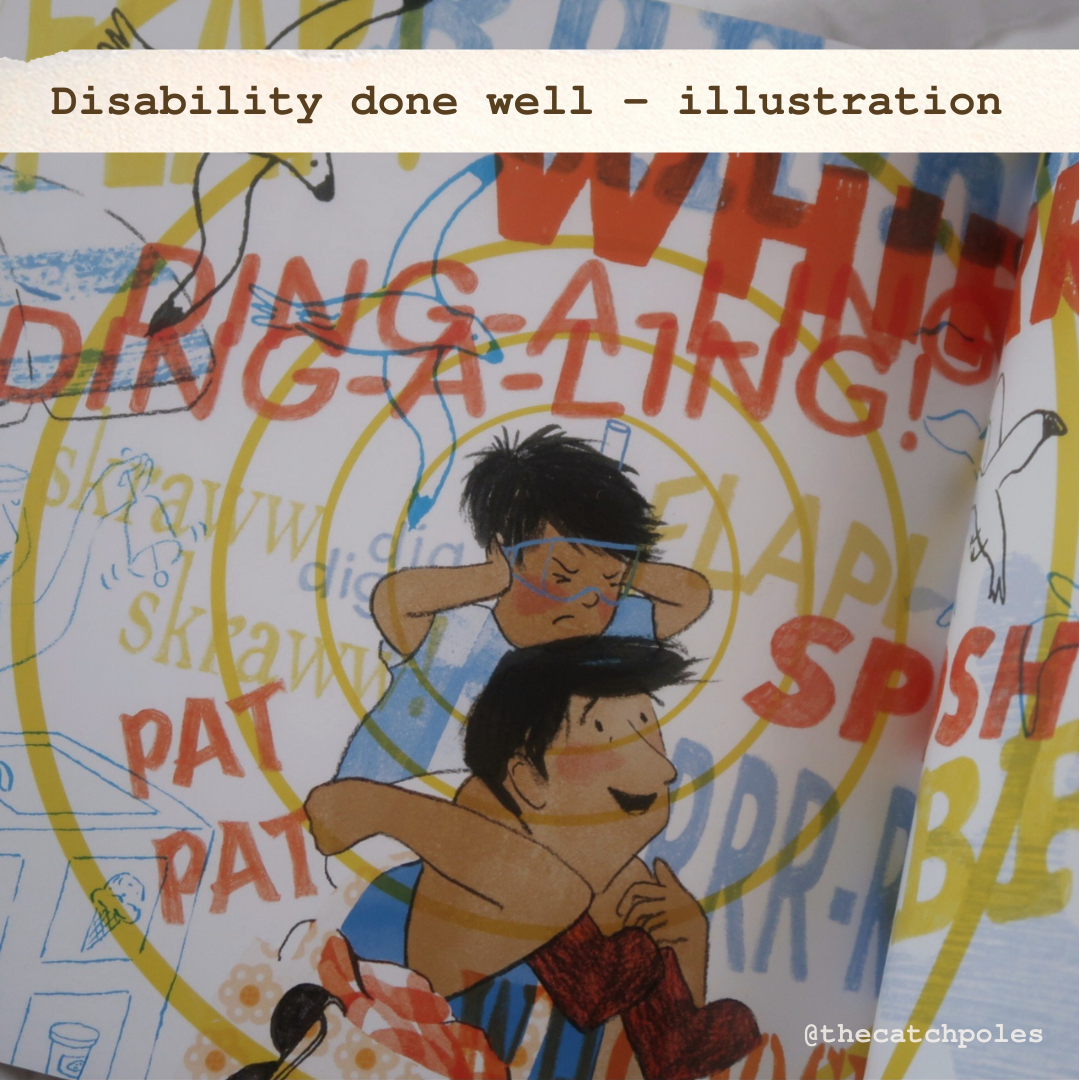
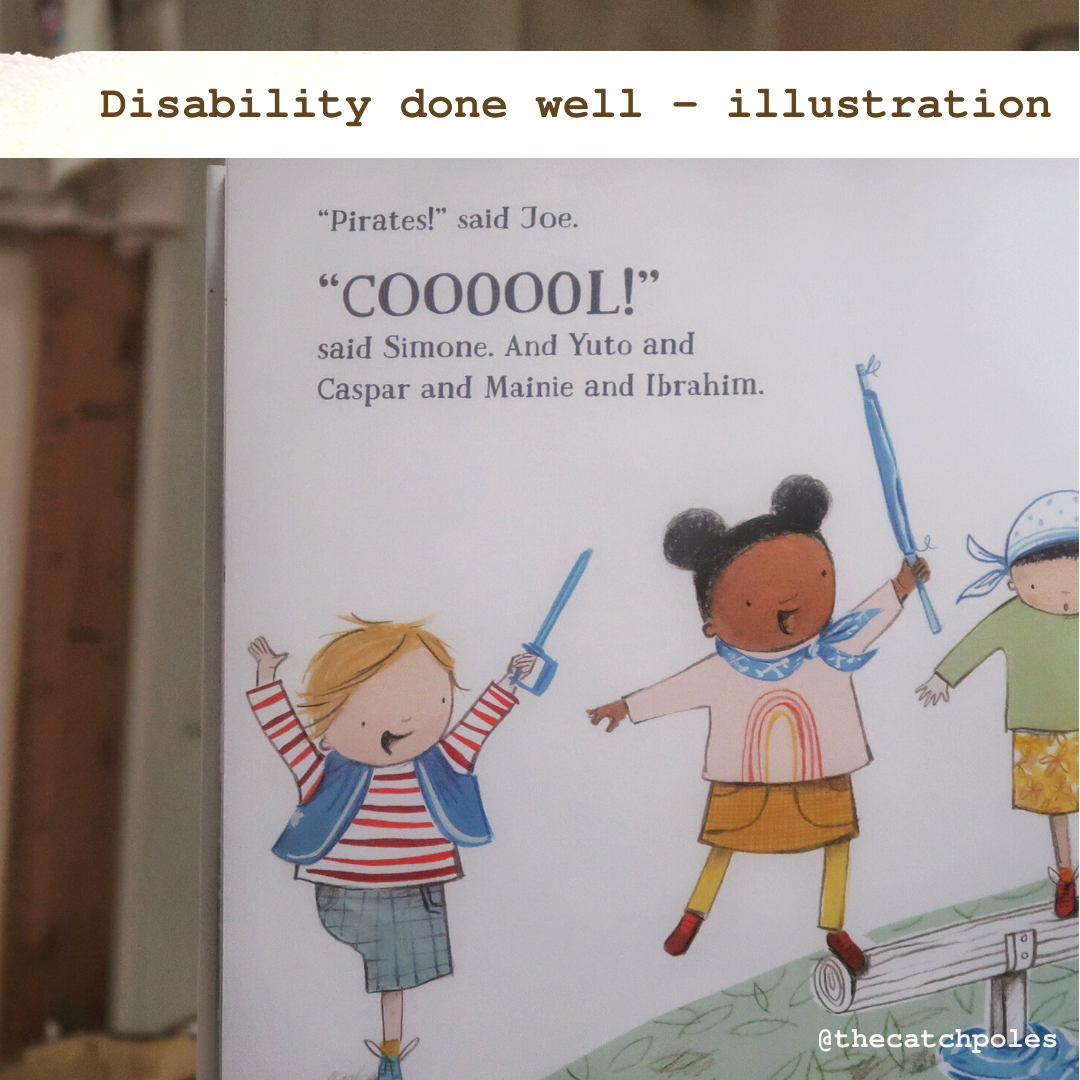

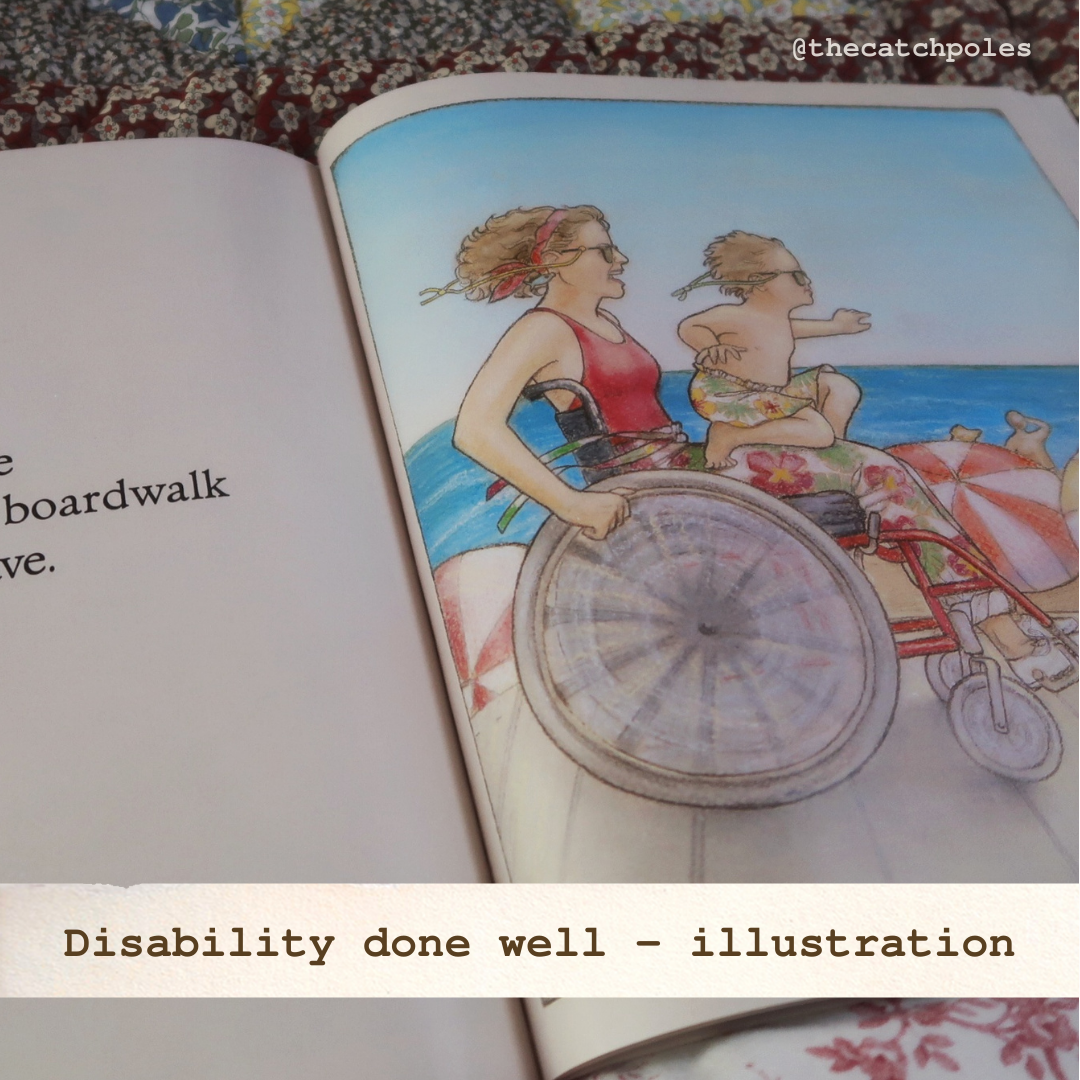
If you’re a non-disabled illustrator (without a bucket-load of research or a disabled author to guide you) we’d strongly advise against creating a main character with a disability. But a disabled character in a group or a crowd scene can be a good move.
The trouble is, with any group we aren’t part of we all have stereotypes in our subconscious. The ‘sassy’ Black friend. The ‘flamboyant’ gay friend. (Hm, both sidekicks…) We’ve all been fed these stereotypes again and again – of course they stick. For us too.
It’s something we have to watch out for as literary agents, especially with marginalised groups we don’t belong to.
Inevitably, if you’re working to deadline and looking to include a disabled character in a crowd scene, the clichés might be what you reach for. Because they’re familiar.
Disability clichés in illustration – some examples:
- Wheelchair users are girls. Almost always.
- Amputees are boys or men. Almost always.
- Amputees usually wear prosthetic limbs.
- People with facial disfigurements tend to be boys.
- Wheelchairs are manual – not powerchairs.
- Wheelchair users are full-time, non-walking (though in fact, most can walk).
Of course we’re not saying never put a girl in a manual wheelchair in a crowd scene – girls in wheelchairs exist! But it’s worth knowing there are already a lot of them.
There are reasons these stereotypes come up again and again – which we hope to go into in another post. They exist across all media – it’s inevitable they’re reflected in picture books and illustration too.
You may have noticed, we actually personally fit these stereotypes.
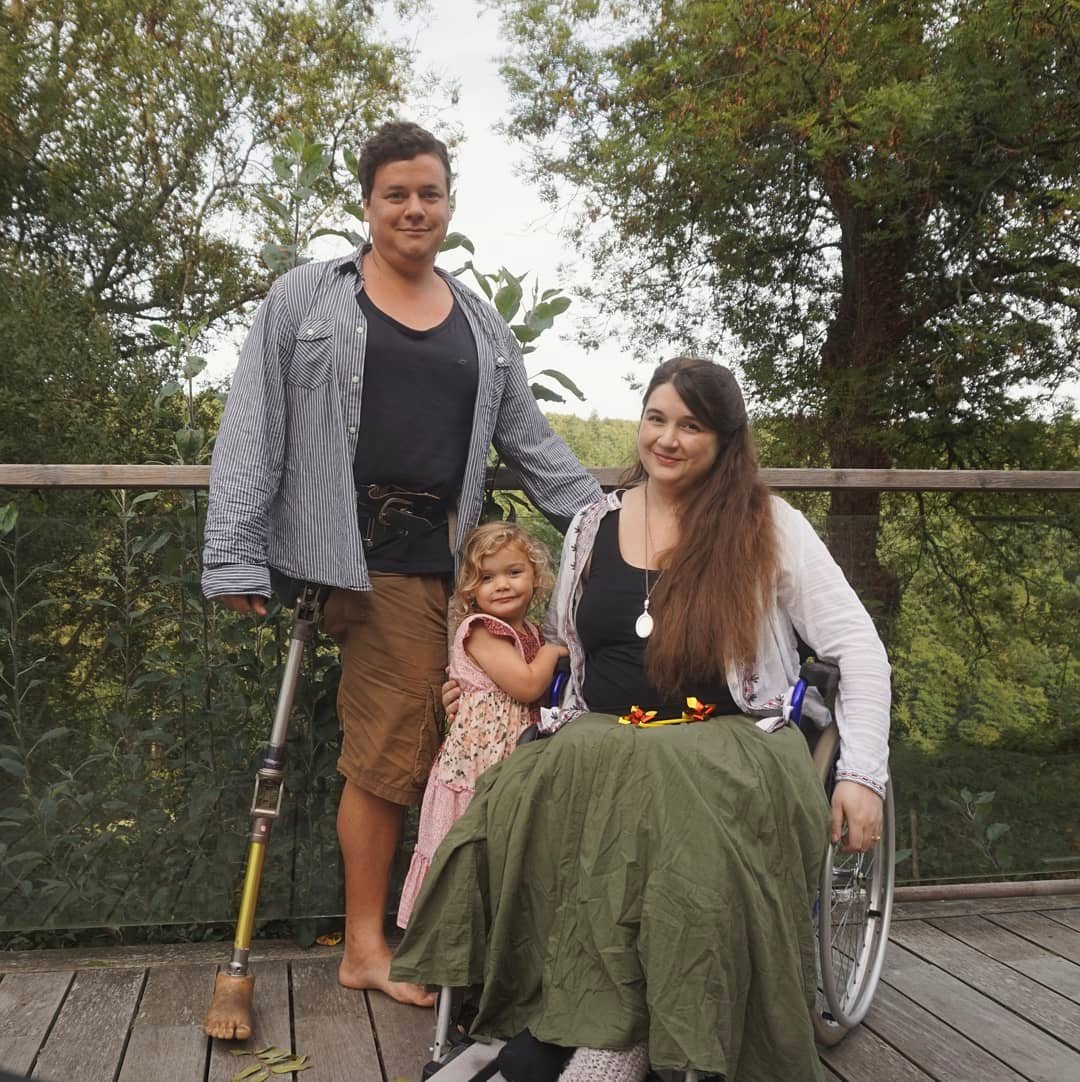
A man who’s an amputee, and a non-ambulatory manual wheelchair-using woman. We exist, too!
But if every illustrator reaches for the same couple of disabilities within the same genders, we end up with unintentional uniformity.
Which doesn’t represent real life.
(And can have odd implications – like the sticker book with 13 wheelchair users dotted about. What lower-limb-specific disaster had hit this park, we wondered?!)
Disability representation we’d like to see more of:
- crutches, sticks & other mobility aids
- disabled adults – especially parents, and adults with jobs!
- powerchairs
- amputees without prosthetics
- ambulatory (part-time) wheelchair users
- characters with dwarfism
- blind characters
On illustrating wheelchairs specifically
Wheelchairs are popular with illustrators, but some things to consider:
- Our feet sit on a footplate, not the ground. (Which makes sense if you think about it – how would that work?! There are exceptions, but this is very much the norm.)
- There’s a big difference between a temporary, hospital wheelchair and a more serious, aspirational chair.
- Size. In some picture books the wheelchair grows and shrinks page by page. Work out what the right size wheelchair looks like first, and aim for consistency.
- Most wheelchair users propel their own chairs.
- We aren’t glued to our chairs. Many can walk, all of us sit on e.g. sofas, too.
And many, many places are simply inaccessible to wheelchairs. We can’t glide up steep hills or fly up steps. Make it make sense!
Disability isn’t an aesthetic choice. Research is your friend.
NB: As an amputee & a wheelchair user, that’s our bias. We’re interested to hear from other disabled readers. And would like to thank the commenter on Instagram who pointed out that disabled adults ‘with jobs’ was an important gap – we’ve added it here.
– Lucy and James Catchpole
More from us on disability & books
- Disability in picture books | Our top 6
- 20 great books by disabled authors
- 9 unhelpful disability tropes in kids’ books
James Catchpole runs The Catchpole Agency with Lucy Catchpole – a children’s literary agency. We also write books – picture books illustrated by Karen George. Find them at books by Lucy & James.

(We posted a shorter version first on Instagram on the 15th February 2022)
[Image description:
Image one: A background photo of my wheelchair and James’s prosthetic leg – you can just see one wheel and the bottom of the leg. The leg is functional, metal with an incongruously realistic foot. They’re in the garden. Our text reads “Disability – tips for illustrators”
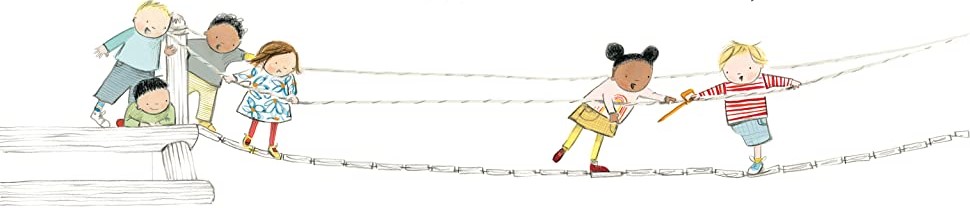
Image two: A page from Frida Kahlo: Little People Big Dreams.
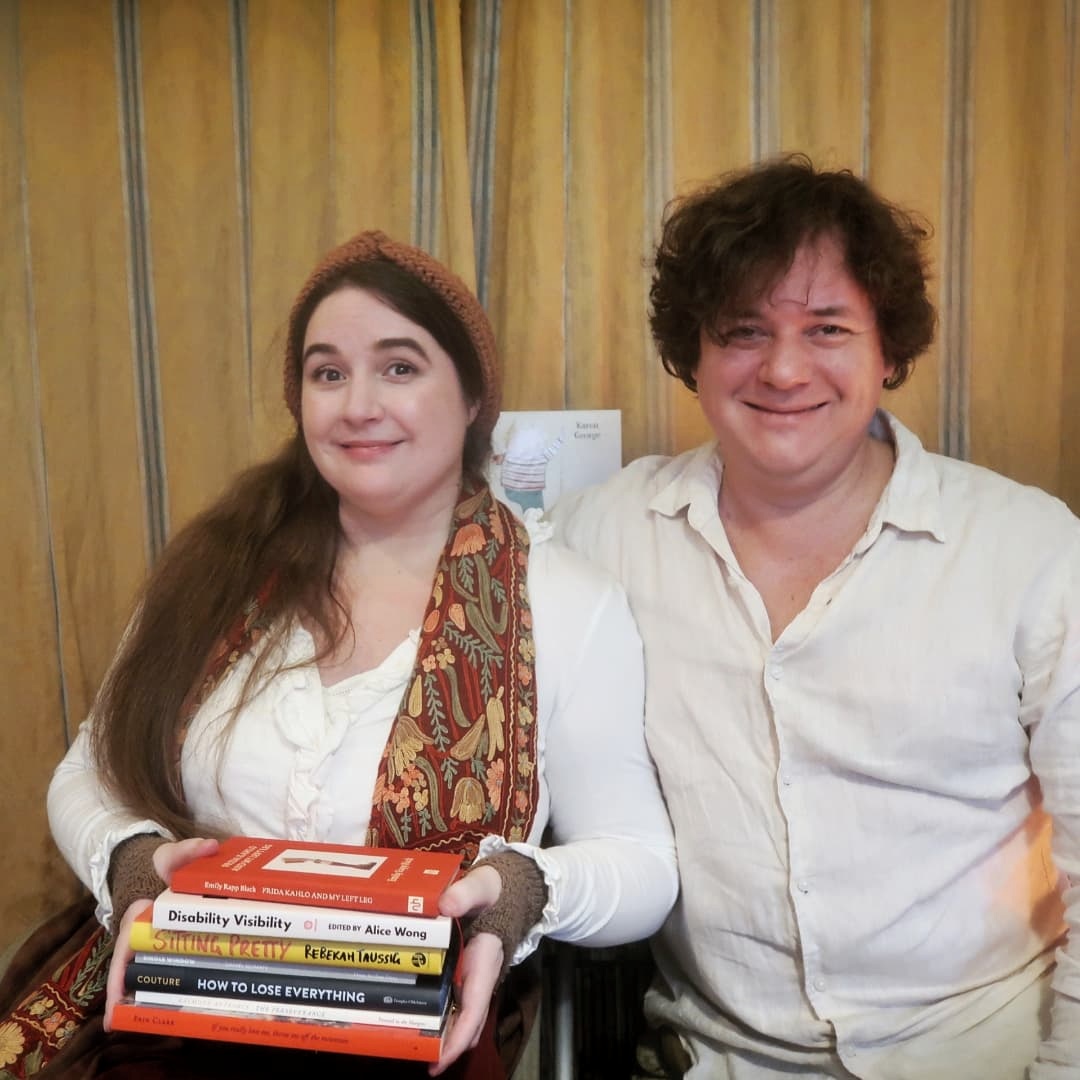
Image three: A photo of us – a white man and woman with brown hair. We’re sitting – you can’t see we’re disabled. We’re holding books and smiling. Our text reads: “Disability – tips for illustrators, by real life disabled publishing people.”
Slideshow:
Each image is a photo of a page of a book in which we think a disabled character has been particularly well illustrated. Our text reads: “Disability done well – illustration” on each image.
- Illustration from Can Bears Ski? by Polly Dunbar – showing the young bear character in a moment of peace in a quiet library. (Written by Raymond Antrobus.) (We represent Polly.)
- Illustration from I Am Not a Label by Lauren Baldo – of Eliza Suggs, a Black disabled woman dressed in C19th fashion. (Written by Cerrie Burnell.)
- Illustration from This Beach is Loud by Samantha Cotterill. A young child with brown skin sits on his father’s shoulders with his hands over his ears. Sensory overload is shown with colourful, large sound words overlapping and surrounding him.
- Illustration from What Happened to You? by Karen George . A one-legged white child stands happily, mid-game, with two friends. (Written by James!)
- Illustration from El Deafo by Cece Bell – a graphic novel. A deaf child-rabbit’s friend is shouting at them – ineffectively and irritatingly.
- Illustration from Mama Zooms by Jane Cowen-Fletcher – a child rides on his mother’s lap as she whizzes along a beachfront in her wheelchair.
- Illustration from Frida Kahlo: Little People Big Dreams, by Gee Fan Eng . Schoolgirl Frida stands slightly apart from the other girls. She’s wearing a leg brace. (Written by Maria Isabel Sánchez Vegara.)
Next image: a photo of Lucy in her wheelchair and James wearing a prosthetic leg. Lucy is pregnant and their daughter is between them.]

 The Catchpoles
I was actually really happy to see an autistic character or someone with sensory issues. I don’t remember ever seeing that as a kid. Although of course the character is a boy because most autistic characters in media are.
LikeLike
It’s true, the way particularly disabilities consistently go with particular genders in books and media is wild. I don’t know if you’ve seen our disability book list (a couple of posts back) but A Kind of Spark has an autistic female main character – a middle grade novel, not illustrated though.
LikeLike
[…] THIS! –> “Disability! Tips for illustrators, by real life disabled publishing people” – The Catchpoles, […]
LikeLike
This is so helpful, thank you! I wish there was a way to show invisible disabilities too, so many people with auto-immune disease (myself included) are missing, but as an illustrator I’m still trying to come up with ways to support that too.
LikeLike