Teaching resources | Ages 3 to 11+ | EYFS, KS1, KS2 + | Colouring
From author and wheelchair user Lucy Catchpole, teacher Katie Renker
Below are example images – carry on down the page to download the pdfs. All illustrations are by Karen George.
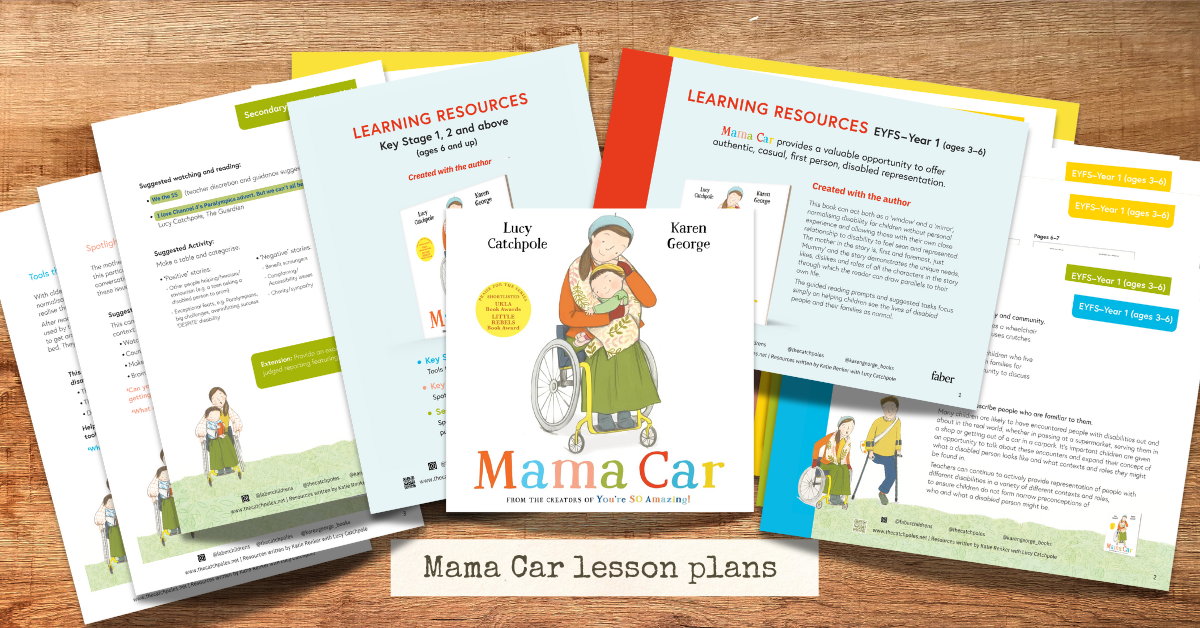
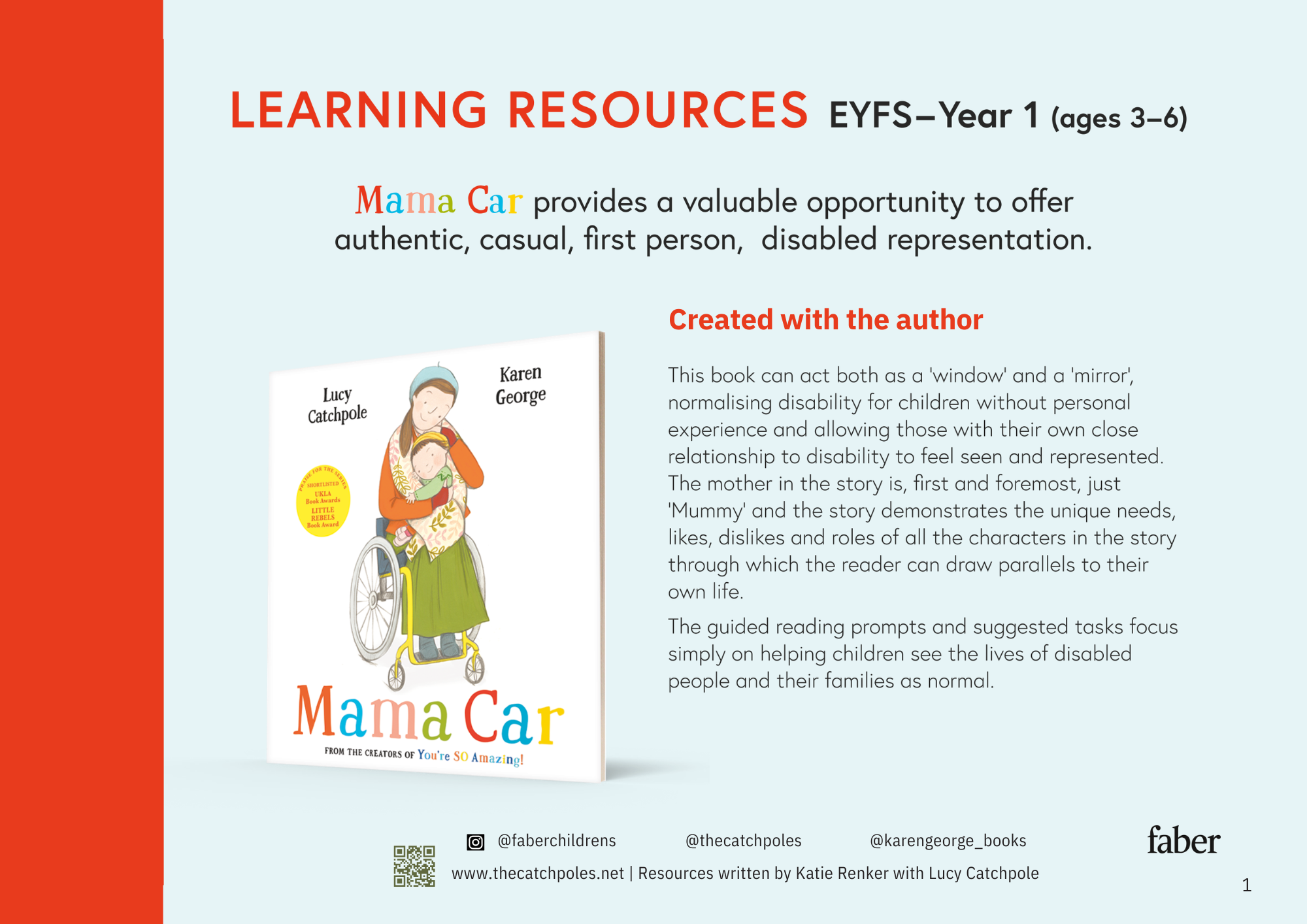
Example images – download the full pdf further down the page 
Example images – download the full pdf further down the page 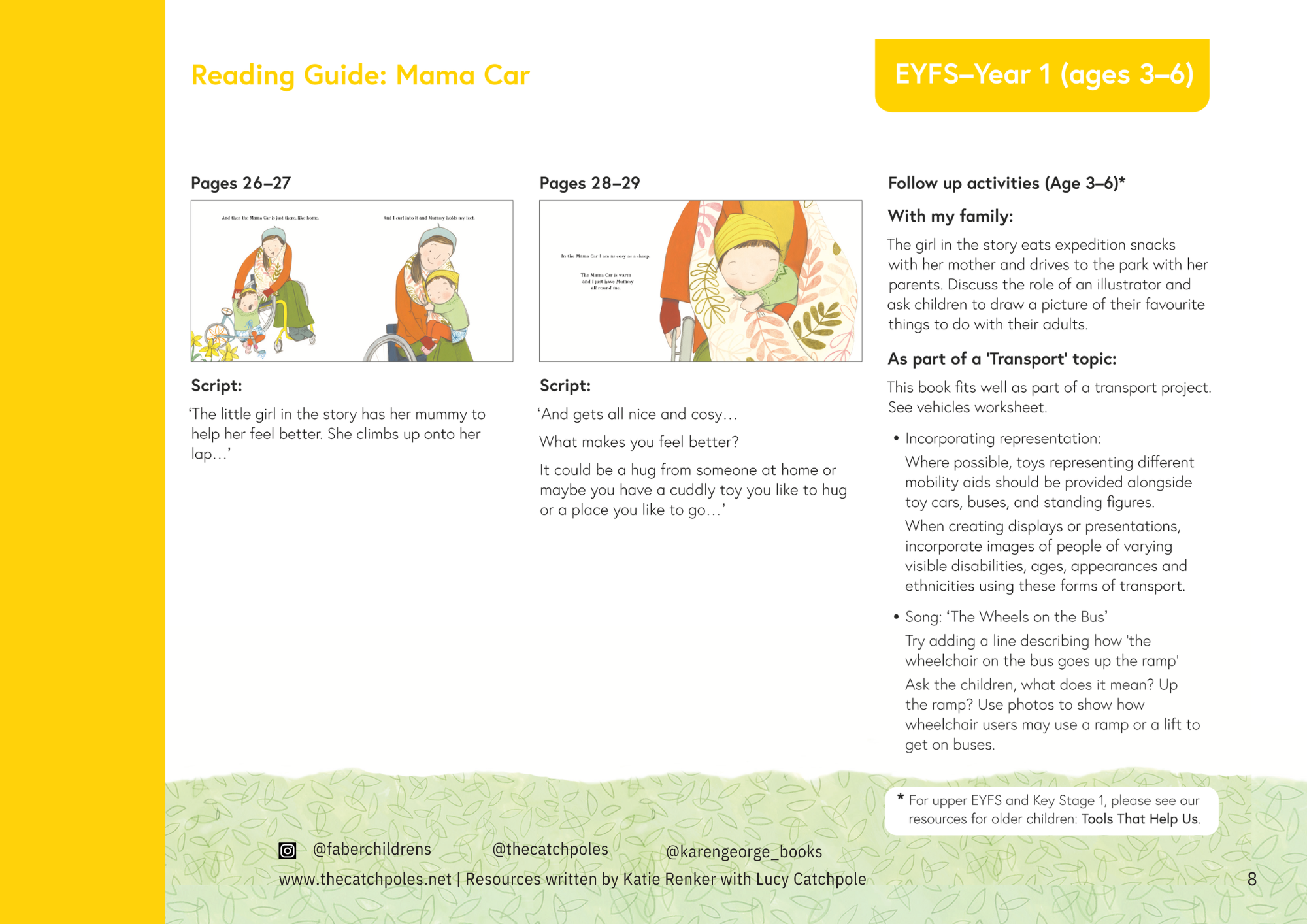
Example images – download the full pdf further down the page 
Example images – download the full pdf further down the page 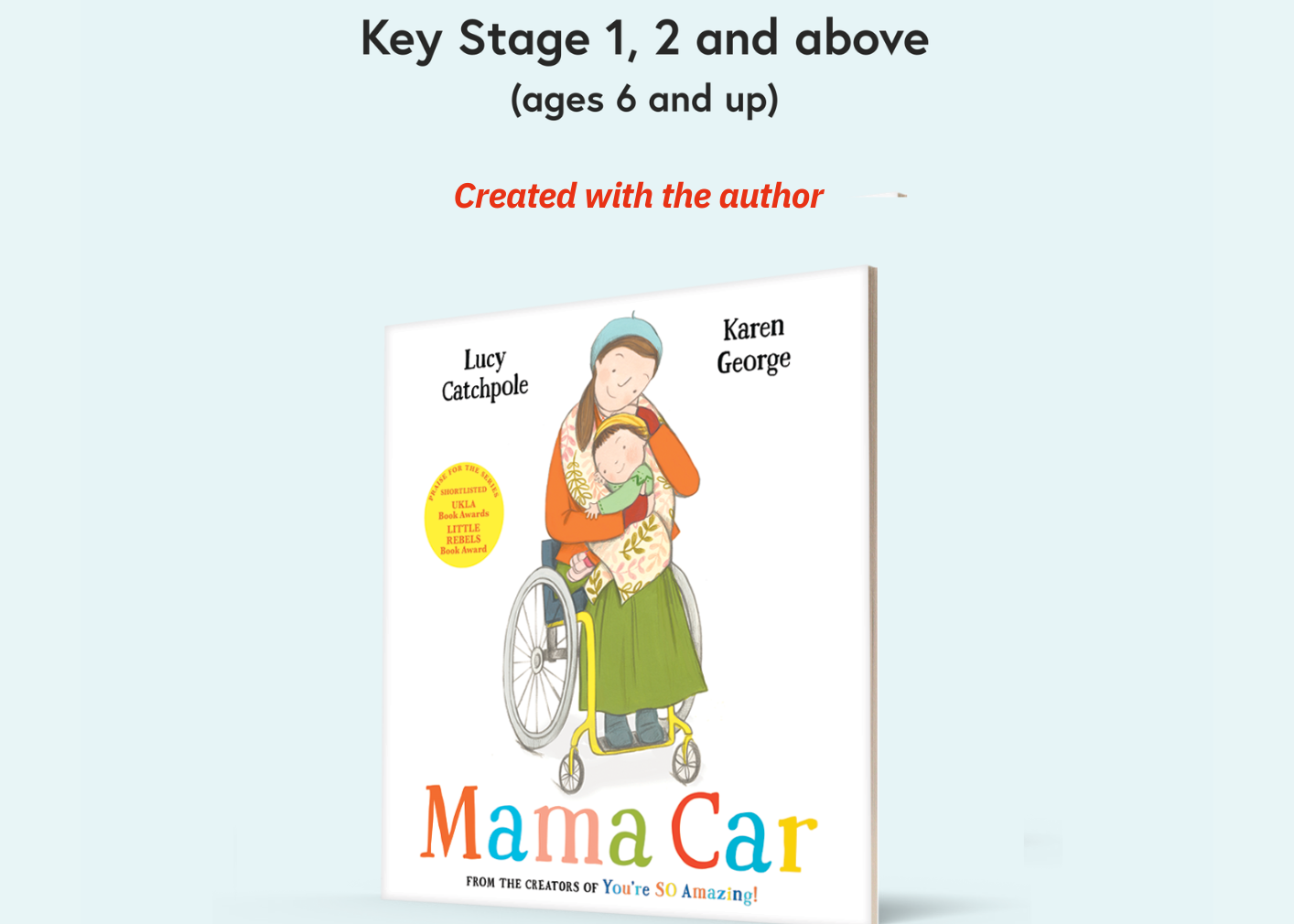
Example images – download the full pdf further down the page 
Example images – download the full pdf further down the page 
Example images – download the full pdf further down the page 
Example images – download the full pdf further down the page 
Example images – download the full pdf further down the page 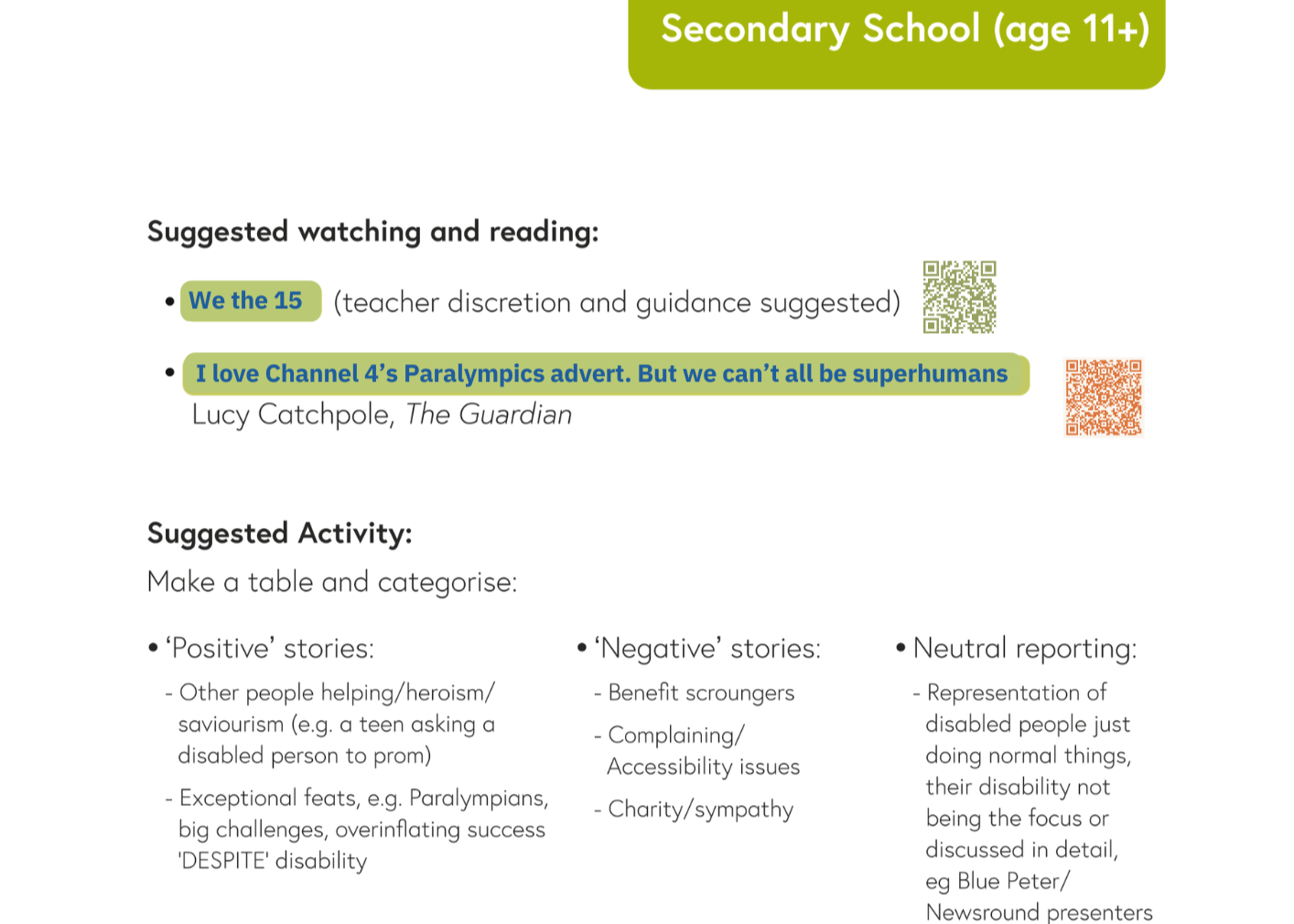
Example images – download the full pdf further down the page 
Example images – download the full pdf further down the page
Mama Car is a picture book about a young child, her mother, and her mother’s wheelchair – an object of great love and comfort. I asked Katie Renker, a primary school teacher and wheelchair user, to create these lesson plans with me. We hope they’ll be used internationally, for age 3 right through primary school. We also have separate, UK specific curriculum documents for early years in England, Scotland & Wales.
New: now Mama Car is out in the US, we’ve put together teaching tips and colouring pages with publisher Little Brown, too.
On the one hand, Mama Car is just a happy story about a child and her mother. And for teachers simply looking to include a book with disabled characters at story-time, I hope it will be enjoyed like any other picture book. But it can be more than that, too.
This book has a clear purpose in providing representation for children with disabled parents – and for disabled children, imagining their own futures. But nobody exists apart from disability – we’re everywhere, if you look. Yet many children first encounter disability and wheelchairs in charity videos, or outdated books like Heidi. And wheelchairs still carry a heavy stigma.
Mama Car is a chance to introduce wheelchairs early – not in a sad charity montage, but as a normal, joyful part of daily life.
US Teaching Tips and Colouring Pages
Find UK colouring pages here.
UK age three to six: UK Early Years to Key Stage 1 (EYFS & Year 1)
This is the UK full lesson plan for the young ones – preschool to age 6 or so. Detailed documents for the English, Welsh and Scottish curricula at the end of the page.
Ages six to eleven plus | KS1, KS2 & KS3: Years 1 to 6, and secondary
Although this is a young picture book, Katie has also taken it from KS1 right up to secondary school – in the pdf below. For these older children, she used Mama Car as a starting point and introduced different sources – like video We The 15, and a Guardian article I wrote a few years ago about the Paralympics.
If you teach older children, you may also be interested in our teaching resources for Owning It: Our Disabled Childhoods, non-fiction for age nine and up.
Disability isn’t a monolith, but there is wide consensus – on language used, on common pitfalls. And it’s important that disabled people ourselves are the ones leading these discussions. Thank you for finding us!
Buying the book?
If you don’t yet have a copy of the book, it’ s available in most bookshops – and from Blackwell’s, who deliver internationally (postage included). We get an extra % from orders made through the links below, but no pressure.
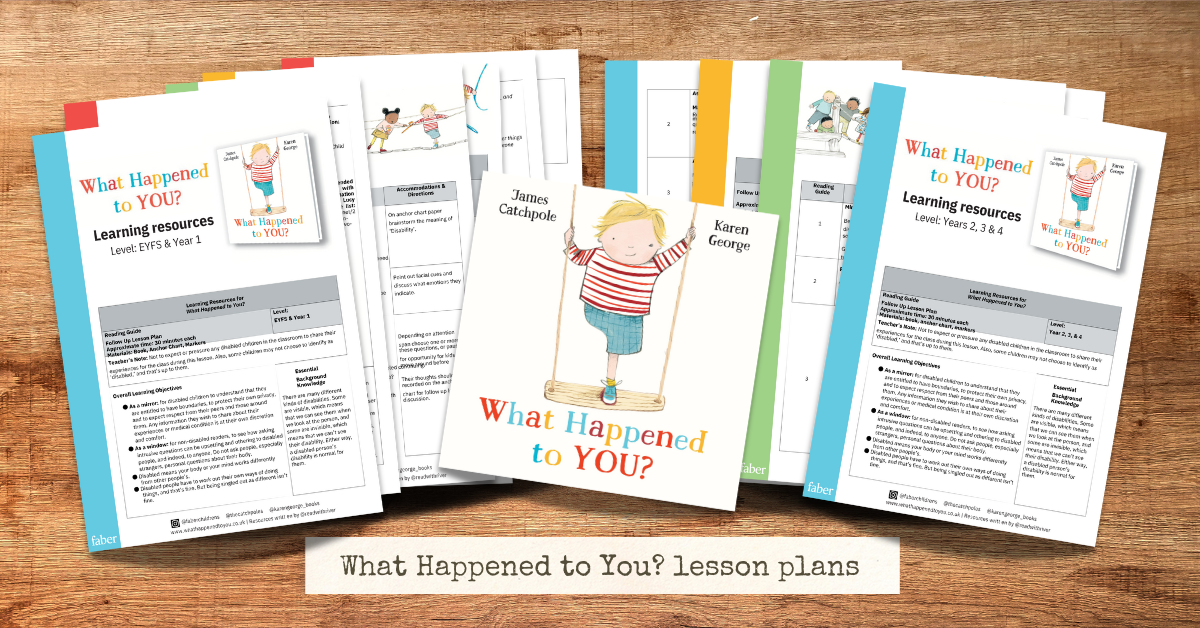
I hope these plans are helpful. It’s been a lovely surprise to see so many teachers use the learning resources for James’s book What Happened to You? – it’ll be gratifying if these prove useful, too.
We’ve pulled together all our lesson plans and other learning resources for teachers – for all our books – in one place. Link just below.
Some of our posts that might interest you – if you’ve got this far:
- About Mama Car | The comfort and joy of a mother’s wheelchair | Lucy Catchpole
- Our page for teachers
- Children in Need vs Disability History Month – with a book list and resources
- Disability – tropes in children’s picture books | Some thoughts for teachers
- KidLitCripCrit – disability in picture books | Our top 6
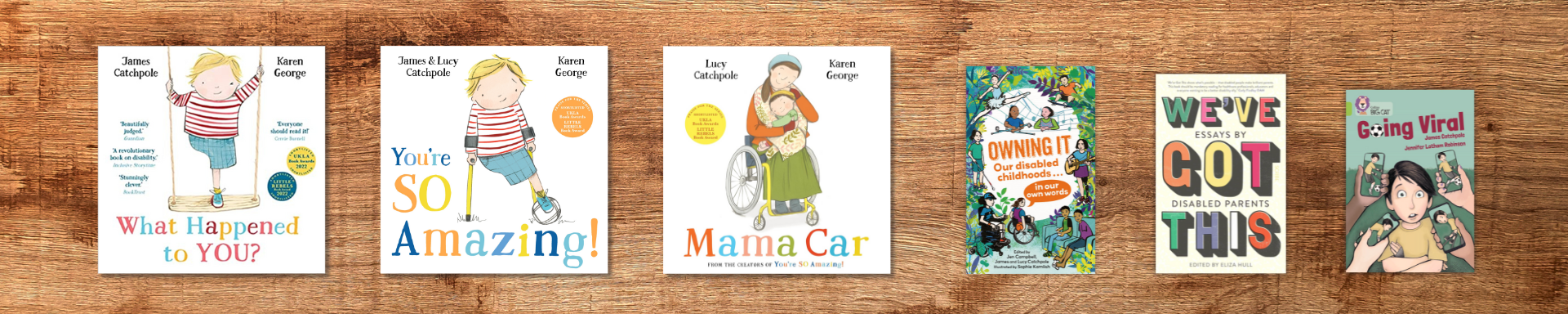
- Our big list of children’s books by disabled authors
Happy reading!
– Lucy Catchpole

Mama Car is written by Lucy Catchpole, illustrated by Karen George, and published by Faber in the UK.
A US edition came out in autumn 2025, published by Little Brown.
Find more about all books by Lucy and James Catchpole here.
Using Mama Car with the Early Years curriculum in England, Scotland & Wales
For UK teachers, Katie carefully considered the Early Years and equivalent curricula in England, Scotland, and Wales. I’ve sorted that into separate documents to download – below.
If you’re in England, the lesson plans cover EYFS, Key Stage One, Key Stage Two and Key Stage Three – going from age three, to Year 1 to 6, and beyond to secondary. But the documents below only engage with EYFS and Development Matters.
These are the UK colouring pages, designed by illustrator Karen George. They’re especially popular with 4 to 6 year olds, and include an expedition list.
(Are they identical to the US colouring sheets, but with the Faber logo instead of Little Brown? Maybe.)



 The Catchpoles
[…] Teaching Materials […]
LikeLike